Best Electric Scooters Under 1 Lakh in India: Real-World Range, Subsidy & Price List
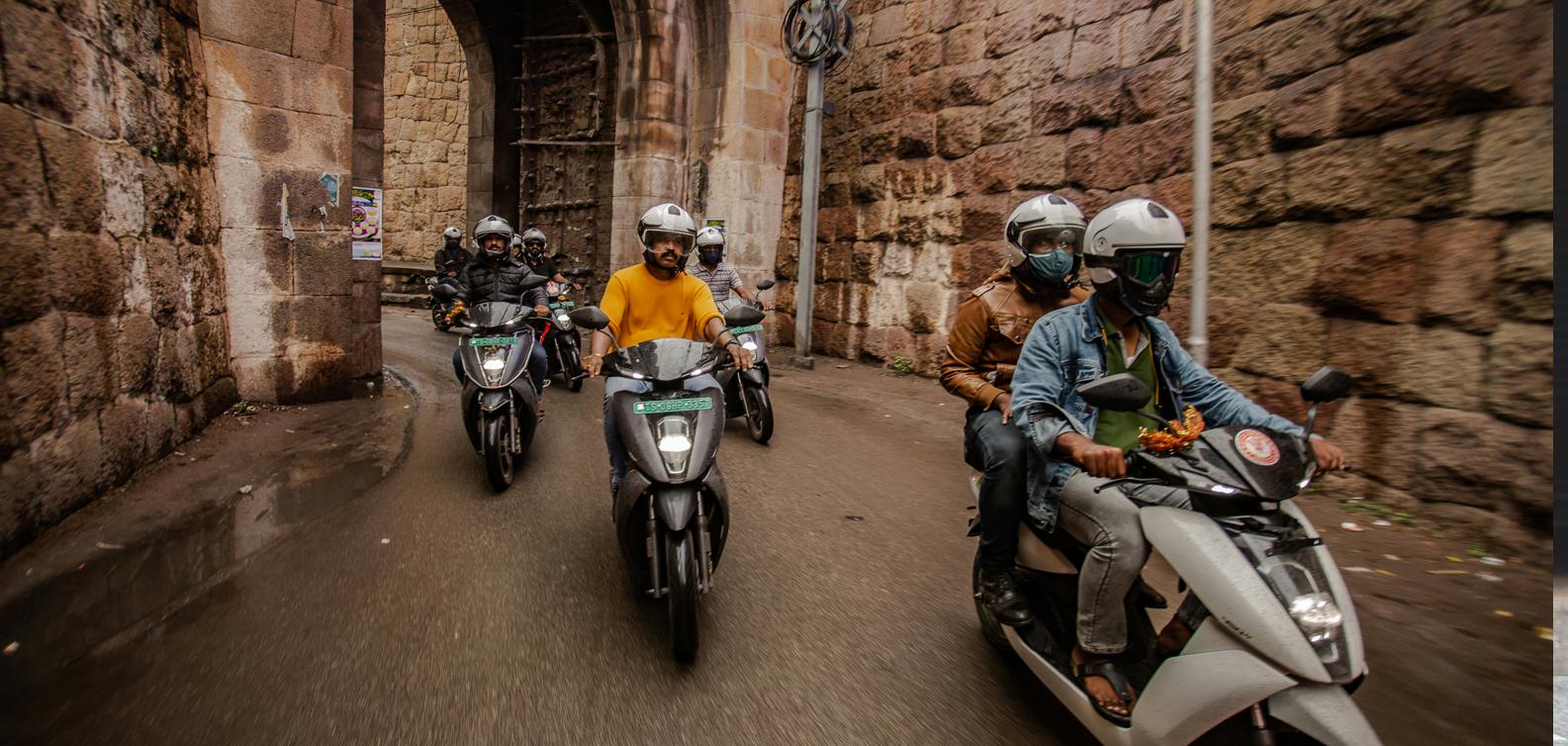
The sub-₹1 lakh electric scooter market moved more in the last twelve months than in the two years before it. The central subsidy that used to bring several models under ₹1 lakh is currently in dispute over whether it's even still active. One long-standing recommendation in this space — the TVS iQube's entry variant — has priced itself out of this budget entirely as of September 2026. We're flagging both clearly below rather than repeating what used to be true.
Quick-glance master comparison table
Prices are approximate Delhi ex-showroom figures, current as of September 2026, before any subsidy is applied. "Real-world range" reflects commonly reported owner distances, not the certified IDC/ARAI figure — see the range section below for why those two numbers diverge.
Model / variant | Ex-showroom (Delhi) | Battery | Certified range | Real-world range | Top speed | Best for |
|---|---|---|---|---|---|---|
Ola S1X 2kWh | ₹79,999–84,999 | 2.0 kWh Li-ion, fixed | ~95–108 km IDC | 65–70 km | 85 km/h | Best Ultra-Budget High-Speed Pick |
Ola S1X 3kWh | ₹89,999 | 3.0 kWh Li-ion, fixed | ~143–176 km IDC | 100–105 km | 90 km/h | Best Range Under ₹90k |
Ola S1X 4kWh | ₹99,999 | 4.0 kWh Li-ion, fixed | ~242 km IDC (claimed) | Not independently verified — see note | 90 km/h | Longest range right at the ₹1 lakh ceiling |
Bajaj Chetak 2901 | ₹95,998 | 2.88 kWh Li-ion, IP67, fixed | 123 km ARAI | 85–92 km | 63 km/h | Best All-Metal Build |
Kinetic Green E-Luna | ₹69,990–89,990 | 2.0 kWh Li-ion, fixed | 110 km certified | 75–85 km | 50 km/h | Budget pick — note it's a registered moped, not a scooter (see below) |
Ampere Magnus Neo* | ₹90,999 | Removable Li-ion | 125 km claimed | Not independently verified — see note | 65 km/h | Current Ampere option — see discontinuation note |
The original research for this article recommended the Ampere Magnus EX. That model was discontinued in India on 11 March 2026 (last price ₹84,900). We've substituted what appears to be the closest current Ampere model, the Magnus Neo, but this substitution has not been through the same depth of verification as the other rows — treat it as provisional and confirm current specs with Ampere before relying on it.
Why these models aren't in this table:
TVS iQube 2.2kWh - Our initial research treated as the flagship "Best Overall Family EV" pick — now starts at approximately ₹1.01–1.19 lakh ex-showroom depending on city and current offers, based on multiple current listings. TVS appears to have both slightly increased the base battery (now described as 2.3kWh on some listings) and raised prices since the research behind this article was frozen. We're not presenting it as a sub-₹1 lakh option because, on current evidence, it isn't one — see the note below for what this means if you were specifically shopping for an iQube.
Bounce Infinity E1+ - Pricing here was genuinely inconsistent across sources we checked: one listing shows a recent ₹89,999 price for an "Infinity E1+," while other current listings describe an "Infinity E1 Plus" starting around ₹1.16 lakh. We could not resolve whether these are the same product at different points in time, a naming overlap, or genuinely different variants. We're leaving it out of the confident recommendations rather than guessing — confirm directly with a Bounce dealer if this model interests you.
The sub ₹1 lakh EV landscape has shifted
Treat ₹60,000, ₹70,000 and ₹1,00,000 as one continuous market, not three separate shopping trips — the same buyer comparing an Ola S1X 2kWh against a Bajaj Chetak 2901 is asking one question ("how much extra range and build quality does ₹15,000 more buy me?"), not three unrelated ones.
What's changed since this segment was last mapped is worth naming directly: the model that used to anchor the "under ₹1 lakh, but a proper mainstream brand" position — the TVS iQube's base variant — has moved above this budget. That doesn't mean the segment has shrunk to nothing; it means the Ola S1X range and the Bajaj Chetak 2901 currently do more of the work of "genuine, mainstream, sub-₹1-lakh electric scooter" than they did a year ago.
What you actually get under ₹1 lakh
Top speed: 50–90 km/h across this list — genuinely capable of city and arterial-road riding, unlike the 25 km/h non-RTO scooters covered in Ecozaar's separate budget guide. Every model here requires standard RTO registration and a valid driving licence.
Battery: lithium-ion packs from 2.0–3.0 kWh dominate this bracket; only the Kinetic Green E-Luna and (per its own spec sheet) the Ampere Magnus Neo offer a removable pack among the models we could confidently verify — most others, including the entire Ola S1X range and the Chetak 2901, use a fixed battery you charge in the scooter.
Displays and connectivity: touchscreen or TFT displays with basic navigation and ride stats are standard across this list, not a premium extra.
Storage: boot space varies meaningfully by model — Bajaj's pressed-steel body tends to offer a different storage shape than the composite-bodied Ola and TVS designs; check actual litre capacity for your specific model rather than assuming they're interchangeable.
Build quality: the Chetak's all-metal, pressed-steel construction is a genuine point of difference from the composite-bodied competition — whether that matters to you depends on how you weigh long-term corrosion/dent resistance against the composite bikes' typically lighter weight.
Tier 1: ₹65,000–₹75,000
The Kinetic Green E-Luna and the entry Ola S1X 2kWh are the two credible options at this end of the budget, and they serve different needs — one is a registered moped built around simple, low-speed practicality, the other is a genuine high-speed scooter with real city usability.
The Kinetic Green E-Luna revives the classic Luna nameplate as an electric moped rather than a scooter proper — it's registered, requires a driving licence like everything else in this article, and caps out at 50 km/h. Its strongest use case is a rider who wants the lowest entry price in this tier and doesn't need highway-adjacent speed.
The Ola S1X 2kWh, once you account for its current ₹79,999–84,999 pricing, trades some of that low-end affordability for genuinely higher performance — an 85 km/h top speed and IDC-rated range in the 95–108 km bracket — but its real-world range (65–70 km) means you'll be charging more often than the certified figure suggests.
Tier 2: ₹75,000–₹1,00,000
The Bajaj Chetak 2901 and Ola S1X 3kWh are the two strongest, most confidently verified options in this tier as of September 2026; treat the TVS iQube and Bounce Infinity E1+ as needing direct dealer confirmation before you shortlist them here.
The Bajaj Chetak 2901 is the most distinct build in this list — an all-metal, pressed-steel body with an IP67-rated battery, priced consistently at ₹95,998 across the sources we checked (this is one of the few prices in this research that showed no discrepancy at all). Its 63 km/h top speed is the lowest of the "proper scooter" tier here, a deliberate trade-off for its metal-bodied durability positioning rather than outright performance.
The Ola S1X 3kWh, at ₹89,999, delivers the best range-per-rupee among the models we could confidently verify — a real-world range in the 100–105 km bracket that comfortably covers most multi-day city usage between charges. Ola also now offers a 4kWh variant at ₹99,999 — right at this article's ceiling — with a claimed IDC range around 242 km; we could not find independently tested real-world range data for this specific new variant, so treat the claimed figure with the same skepticism you'd apply to any manufacturer number until independent reviews catch up.
2kWh vs 3kWh: which battery size should you actually buy?
This is really a question about your daily distance and charging habits, not a universal "bigger is better" call.
If your daily round trip is genuinely under 40km and you can charge every night without fail, the smaller 2kWh pack (Ola S1X 2kWh) covers you with margin, at a real price saving.
If your daily distance regularly exceeds 40–50km, or you can't guarantee a nightly charge (irregular schedule, shared parking without a reliable socket), the 3kWh step-up buys meaningful breathing room — the real-world range gap between the two Ola variants (roughly 65–70km vs 100–105km) is large enough to change how often you think about charging at all, not just a marginal improvement.
Battery cycling: a larger pack run through the same daily distance completes fewer full charge cycles over its life than a smaller pack pushed closer to its limit every day, which can support a longer useful battery life — though we're not presenting this as a guaranteed outcome, since real-world degradation depends on charging habits, heat exposure and how the battery management system is tuned.
We're not going to tell you 3kWh is "worth it" or "not worth it" in the abstract — work out your actual daily distance first, then decide whether the price gap between the two Ola S1X variants (roughly ₹5,000–10,000 depending on current offers) buys you a real reduction in how often you plug in.
Real-world range vs certified IDC/ARAI figures
Every certified range figure in the table above comes from a standardised lab test (IDC for most current models, ARAI for the Chetak and Kinetic Green E-Luna) run under controlled conditions — moderate speed, single rider, flat surface, no wind. Real-world range for every model here runs meaningfully below that figure, typically by 25–40% depending on the model and how it's ridden.
Factors that shrink range below the certified number, in roughly descending order of impact: higher average speed (riding near a scooter's top speed consumes disproportionately more energy than cruising at a moderate pace), stop-start city traffic (frequent acceleration from a stop is more energy-intensive than steady cruising), rider and pillion weight, headwind, cold weather (which reduces usable lithium-ion capacity), under-inflated tyres, and riding mode selection (most of these scooters offer an "Eco" or similar mode that trades acceleration for range — using it consistently narrows the real-world gap versus riding in the sportiest available mode). Regenerative braking, where fitted, claws back some of this gap in stop-start traffic specifically, but doesn't eliminate it.
Charging logistics
Every scooter in this list charges from a standard household socket on its bundled charger — no special wiring is required for normal home charging. A few points specific to this tier:
Charging time scales with battery size, as you'd expect: the Ola S1X 2kWh's roughly 5-hour full charge is meaningfully shorter than the 3kWh variant's ~7.4 hours on the same charger — worth factoring in if you're relying on a single overnight charge window rather than topping up whenever convenient.
Removable vs fixed batteries: among the models in this article, the Kinetic Green E-Luna and Ampere Magnus Neo are described as offering a removable/detachable pack in current spec sheets; the entire Ola S1X range and the Bajaj Chetak 2901 use fixed batteries you charge in the scooter itself. If you don't have secure, accessible parking near a socket, a removable-battery model is worth prioritising — but confirm removability on your exact variant, since it can change between model years.
Electrical safety: avoid extension-cord daisy-chains and don't leave a charger connected and unattended for extended periods, particularly in exposed or damp locations during monsoon season.
PM E-DRIVE & state EV benefits — verify before you assume a discount applies
This is the single most important thing to check before you budget for one of these scooters, and it's genuinely unsettled as we write this.
The PM E-DRIVE scheme's established rate structure for electric two-wheelers, in place since April 1, 2025, is ₹2,500 per kWh of battery capacity, capped at ₹5,000 per vehicle or 15% of the ex-factory price (whichever is lower), for vehicles priced at or below ₹1.5 lakh ex-factory. That part is consistently reported across every source we checked.
What's genuinely disputed is whether this incentive is still active for electric two-wheelers when you buy. Multiple current sources report that the two-wheeler component of the scheme was extended once, from its original March 31, 2026 cutoff to July 31, 2026 — and then diverge sharply on what happened next:
Some sources (dated mid-August 2026) report a further extension of the two-wheeler incentive alongside the rest of the scheme, out to March 31, 2028.
Other, similarly recent sources (dated late July and mid-September 2026) report that the two-wheeler incentive closed on July 31, 2026 and was not further extended, with electric three-wheelers, buses and charging infrastructure continuing to receive support while two-wheelers specifically dropped out.
We could not resolve this contradiction with confidence in this research. Given today's date, the only reliable way to know whether the scooter you're planning to buy is currently subsidy-eligible is to ask the dealer directly whether they can generate a live PM E-DRIVE e-voucher for it at the point of sale, or check the scheme's status directly on the Ministry of Heavy Industries' portal. Don't budget assuming a ₹5,000 discount will apply until you've confirmed it's live for your specific purchase.
State-level benefits are separate from PM E-DRIVE and generally more durable, but still need city-specific confirmation:
Delhi: notified a new EV Policy 2026 (effective July 2026, running to March 31, 2030) with a 100% road tax and registration fee waiver for qualifying EVs, plus a stated two-wheeler purchase incentive — reported structures vary between sources (a declining ₹30,000/₹20,000/₹10,000 across three years in some reports, versus a flat incentive limited to early buyers in others), so confirm the current structure with the Delhi Transport Department rather than relying on either figure as definitive.
Maharashtra: its EV Policy (2025–2030) offers a 100% road tax and registration fee exemption plus a purchase incentive calculated at ₹5,000 per kWh, capped at ₹10,000 for two-wheelers — but only for models on the state's pre-approved list, which is worth checking before you assume any scooter in this article qualifies.
Karnataka: continues to exempt electric two-wheelers specifically from road tax even after a March 2026 policy revision that reintroduced a tiered lifetime tax for electric four-wheelers — the two-wheeler exemption itself doesn't appear to have changed.
Tamil Nadu: reportedly maintains an EV road tax/registration waiver window into 2027, though we did not independently verify the exact current terms for two-wheelers specifically.
Gujarat: has historically offered a capital subsidy and road tax exemption for two-wheelers, but we could not confirm the current 2026 status and exact figures with confidence in this research — check with Gujarat's transport department directly if this affects your decision.
None of these state benefits are guaranteed to stack with PM E-DRIVE in every case, and central and state rules change on different timelines — treat every specific rupee figure above as a starting point for your own confirmation, not a promise.
Electricity math & operating economics
The formula, with every input labelled as an assumption:
Energy consumed per charge ≈ battery capacity × charging-loss factor.
Cost per km ≈ (energy consumed per charge × electricity tariff) ÷ real-world range.
Worked examples (illustrative — swap in your own tariff and confirmed real-world range):
Bajaj Chetak 2901: a 2.88 kWh battery, with a ~15% charging loss, draws roughly 3.3 kWh per full charge. At an assumed ₹8/unit tariff, that's about ₹26.50 per full charge. Across a real-world range of ~88 km (midpoint of the 85–92 km range above), that works out to roughly ₹0.30 per km.
Ola S1X 3kWh: similarly, a 3.0 kWh battery with the same assumptions draws roughly ₹27.50 per full charge; across a real-world range of ~102 km, that's approximately ₹0.27 per km.
Kinetic Green E-Luna: a 2.0 kWh battery draws roughly ₹18.40 per full charge under the same assumptions; across a real-world range of ~80 km, that's approximately ₹0.23 per km.
Change your electricity tariff (residential rates commonly range ₹6–9/unit depending on state and consumption slab) or your real-world range, and every one of these numbers moves — none of them is a universal "X paise per km" figure for every rider.
For comparison, a petrol scooter: At a Delhi pump price of roughly ₹102/litre (September 2026) and a typical 45 km/l for a 100–125cc petrol scooter, fuel cost alone works out to approximately ₹2.27 per km — before oil changes or other engine servicing an EV doesn't need. The gap between roughly ₹0.23–0.30/km on electricity and ~₹2.27/km on petrol is real and substantial, but this comparison covers fuel/electricity only — it doesn't include either vehicle's purchase price, insurance, or servicing, which is why the ownership section below matters just as much as this per-km math.
Build quality, ergonomics & practicality
The Bajaj Chetak 2901's pressed-steel, all-metal body is the clearest structural differentiator in this list — a genuinely different construction philosophy from the composite panels used on the Ola S1X range and most competitors. Whether that translates to lower real-world repair costs after a minor tip-over or parking-lot scrape isn't something we found solid comparative evidence for in this research, so we're not claiming metal automatically means cheaper repairs — it's a build-quality and perception difference more than a proven cost one.
The Ola S1X range prioritises a larger touchscreen and connected-app experience over the Chetak's simpler control layout — which you'll prefer depends on whether you value that tech layer or find it an unnecessary complication for a daily commuter.
For family use specifically, check floorboard space and pillion seat width directly at a dealer rather than relying on spec-sheet numbers alone — this varies enough between models in this list that it's worth sitting on the actual scooter before deciding.
Maintenance, warranty & service network
Warranty terms move often enough in this segment that we're not going to state specific year/kilometre figures here without a live confirmation — ask your dealer for the current written battery, motor and controller warranty terms for your exact model and variant, and get it in writing rather than relying on a verbal assurance or a general brand-level claim.
Service network stability is a genuine differentiator worth researching before you buy, separate from the vehicle's specs. Bajaj and TVS both operate through long-established dealer networks built originally around their petrol-vehicle businesses, which generally means wider geographic service coverage.
Ola operates more of a direct-to-consumer, app-first service model, which some owners find convenient and others find harder to get quick in-person support from — check current service centre density in your specific city before assuming national brand size guarantees local support. This matters more in this category than it might for a petrol scooter, precisely because — as covered in Ecozaar's companion guide to the sub-₹50,000 segment — some electric two-wheeler brands (Hero Electric, most notably, now in liquidation as of a March 2026 report) have seen severe service disruption.
None of the six brands in this specific ₹1-lakh-budget article are in that situation as of this research, but it's a category-wide risk worth checking rather than assuming away.
Which EV scooter should you consider?
Under-30km daily commuter: Ola S1X 2kWh — the lowest entry price in this list with genuinely usable performance for a short, predictable commute.
Family rider, prioritising build and simplicity: Bajaj Chetak 2901 — the all-metal body and IP67-rated battery suit a buyer who wants a straightforward, durable daily scooter over the latest connected-tech features.
50km+ city commuter: Ola S1X 3kWh — the strongest range-per-rupee among the models we could confidently verify in this budget.
Apartment resident without guaranteed ground-floor charging access: prioritise confirming removable-battery status directly with the dealer for the Kinetic Green E-Luna or Ampere Magnus Neo — fixed-battery models (the Ola S1X range and Chetak 2901) require you to bring the whole scooter to a socket.
Delivery/small-business user: none of the models in this specific list are purpose-built commercial scooters — if payload capacity and duty-cycle durability matter more to you than passenger comfort, that's a different buying decision than this article is built to answer.
These are starting points based on the evidence in this article, not a fixed universal ranking — the right scooter depends on your daily distance, charging access, and how much you weigh build quality against range and price.
Sources
Ola Electric — S1X Series Official Product Portal | Ola Electric Mobility Ltd. (Official specifications: 2kWh, 3kWh, and 4kWh battery packs, 85–90 km/h top speed, hub motor architecture, IDC certified range, and ex-showroom Delhi pricing)
Bajaj Auto — Chetak 2901 Official Portal | Bajaj Auto Ltd. / Chetak Technology Ltd. (Official specifications: 2.88 kWh IP67-rated lithium-ion battery, 63 km/h top speed, 123 km ARAI certified range, all-metal steel unibody, and Delhi ex-showroom price)
Kinetic Green — E-Luna Official Product Portal | Kinetic Green Energy & Power Solutions Ltd. (Official specifications: 2.0 kWh lithium-ion battery, 50 km/h top speed, 110 km certified range, heavy-duty tubular chassis, and electric moped classification)
Ampere Electric — Greaves Electric Mobility Official Portal | Greaves Electric Mobility Ltd. (Official specifications for Magnus Neo series, removable lithium battery configurations, and discontinuation records for Magnus EX)
TVS Motor Company — TVS iQube Official Portal | TVS Motor Company (Official product portal confirming base 2.2kWh / 2.3kWh variant price escalation above ₹1.01 lakh, positioning it outside the sub-₹1 lakh ceiling)
Bounce Infinity — E1+ Official Product Portal | Bounce Electric 1 Pvt. Ltd. (Official specifications: removable battery pack, swappable infrastructure compatibility, and variant pricing matrix)
Ministry of Heavy Industries (MHI) — PM E-DRIVE Scheme Guidelines | Ministry of Heavy Industries, Government of India (Official statutory framework for PM Electric Drive Revolution in Innovative Vehicle Enhancement: ₹2,500/kWh incentive capped at ₹5,000 for qualifying electric two-wheelers)
Delhi Transport Department — Delhi Electric Vehicle Policy 2026 | Transport Department, Government of NCT of Delhi (Statutory notification of Delhi EV Policy 2026: 100% waiver of road tax and registration fees for battery-operated vehicles)
Maharashtra Transport Department — Comprehensive EV Policy 2025–2030 | Motor Vehicle Department, Government of Maharashtra (Statutory road tax exemption schedule and fiscal incentive eligibility for electric two-wheelers)
Karnataka Transport Department — Electric Two-Wheeler Taxation Notification | Government of Karnataka (Statutory notification confirming 100% lifetime road tax exemption retained for electric two-wheelers)
Ministry of Road Transport and Highways (MoRTH) — CMVR 1989 High-Speed EV Regulations | Ministry of Road Transport and Highways, Government of India (Statutory mandate requiring mandatory registration, HSRP plates, and valid driving licences for vehicles with speeds >25 km/h or motor ratings >250W)
National Company Law Tribunal (NCLT) — Liquidation Orders (Hero Electric) | Ministry of Corporate Affairs, Government of India (Judicial insolvency proceedings regarding Hero Electric Vehicles Pvt. Ltd. under IBC)
Petroleum Planning & Analysis Cell (PPAC) — Daily Retail Fuel Prices | Ministry of Petroleum and Natural Gas, Government of India (Official statutory benchmark for metro retail petrol pump pricing used in EV vs ICE running-cost calculations)
Frequently Asked Questions
Based on 7 ratings

Tanushree (Author)
Tanushree is a dynamic business strategist with a knack for driving innovation in startups, especially in Fintech and Edtech. With 9 years of work-ex, an IT engineer from MIT Pune, & a MBA from IIM Bangalore (Marketing & Business Strategy), she’s got the mix of analytical and creative problem-solving.
Read more
Related Blogs
Popular articles are selected from the same backend blog feed.

Best Bikes Under 1 Lakh in India: Price, Mileage & Low-Maintenance Commuters
Compare the best bikes under ₹1 lakh in India by price, real-world mileage, maintenance and safety — from sub-₹60k commuters to 125cc options near ₹1 lakh.
Best Bikes Under 2 Lakh in India: Streetfighters, Cruisers & All-Rounders
Compare the best bikes under ₹2 lakh in India: verified ex-showroom prices, real-world mileage, ABS and hardware, and which model fits your budget.
Best Low-Cost Electric Scooters Under ₹40,000–₹50,000: Non-RTO & Budget Commuters
Compare low-cost electric scooters under ₹40,000–50,000 by price, range, battery type, charging, non-RTO rules, running cost and practical ownership risks.
Best 110cc–125cc Family Commuter Scooters in India: Mileage, Comfort & Price Comparison
Compare the best 110cc and 125cc scooters in India by price, real-world mileage, comfort, storage, braking, running cost and the value of upgrading to 125cc.
Best 150cc–160cc Bikes in India: Mileage, Price, Specs & Performance
Compare India's best 150cc–160cc bikes on mileage, price, power, braking and comfort — Pulsar N160, Apache RTR 160 4V, Xtreme 160R, FZ-S and more.
Best 200cc–250cc Performance Bikes in India: Power, Mileage & Highway Cruising
Compare India's best 200cc–250cc bikes on power-to-weight, real-world mileage, highway cruising and price, with the 200cc and 250cc classes covered together.
Best 350cc–500cc Bikes in India: Royal Enfield, Triumph & Mid-Capacity Classics
Compare Royal Enfield, Triumph, Harley-Davidson, KTM and Bajaj bikes from 349cc to 452cc on real price, power, mileage and highway comfort in India.
Best Sports Bikes Under 5 Lakh in India: Track Bikes, Supersports & Top Speed Comparison
Compare the best sports bikes under ₹5 lakh in India by 0–100 km/h, GPS top speed, track ability, electronics, mileage and ownership costs.