Best 110cc–125cc Family Commuter Scooters in India: Mileage, Comfort & Price Comparison
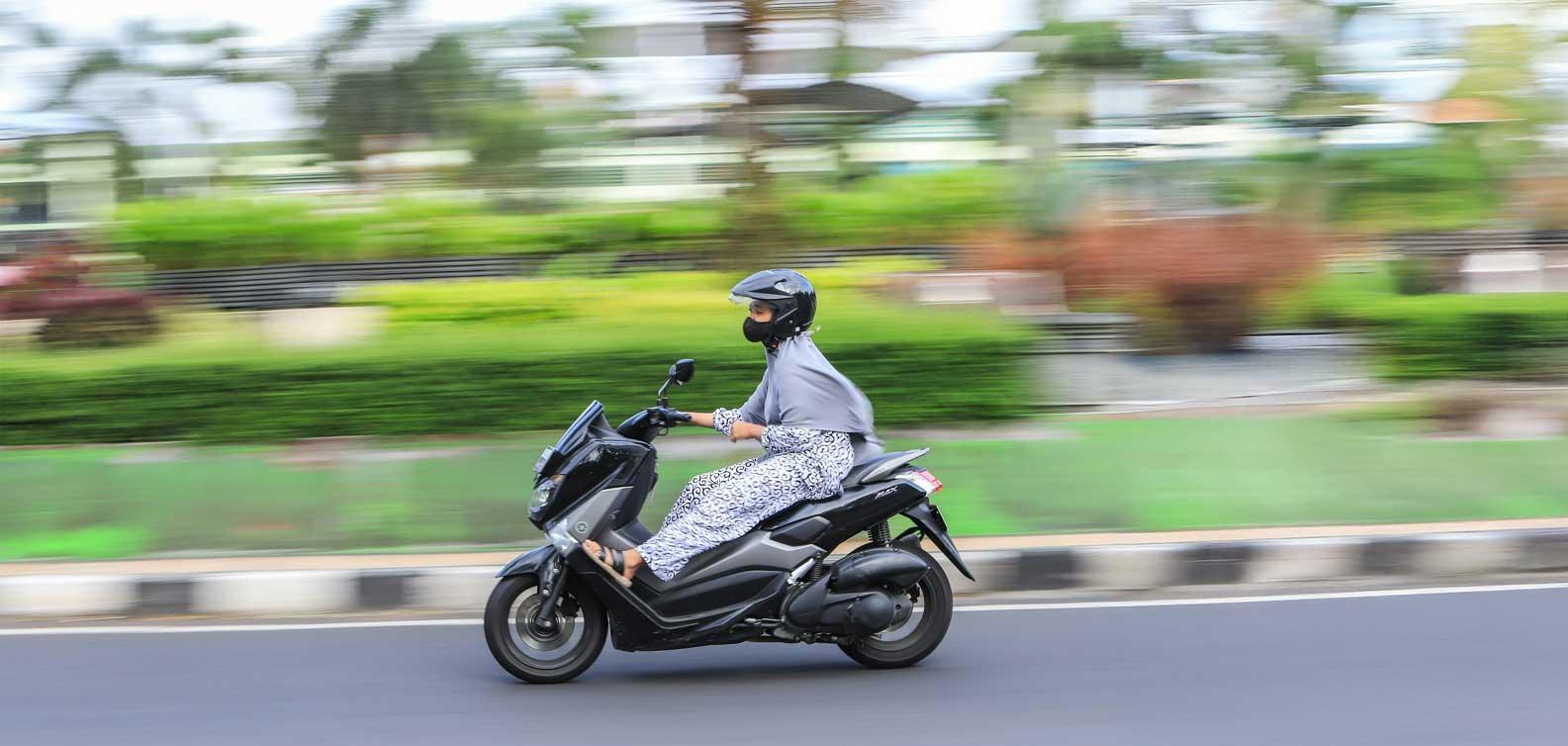
A quick note before the numbers: every mainstream 110cc and 125cc scooter in India went through a mandatory OBD2B emissions update through 2025 and into 2026, and prices moved as a result — in one case dramatically. We're using current, re-verified pricing throughout this guide, not the figures these models launched at originally.
The Executive Answer: 110cc or 125cc?
If you ride mostly solo or with an occasional light pillion, cover under 40km a day, and want the lowest purchase and running cost, buy 110cc — the Honda Activa 110 or TVS Jupiter 110 will do everything you need. If you regularly carry a pillion, want a meaningful reserve of low-end torque for inclines and stop-start traffic with load, or simply want the newer equipment now concentrated on the 125cc trims, buy 125cc — and budget for a genuinely wider price gap than this segment used to have, especially if you're looking at Honda specifically (more on that below).
Leading choices by need, all explained in depth further down: the TVS Jupiter 110 for outright storage and equipment at the 110cc price point; the Honda Activa 125 for badge familiarity and the widest service network, now at a meaningfully higher price than before; the Suzuki Access 125 for the lightest kerb weight in this class; and the Yamaha Fascino 125 Fi Hybrid for the strongest mileage positioning among the 125cc options.
Master Comparison Table: Price, Specs & Best-Use Case
Prices are approximate Delhi ex-showroom figures across variants, current as of September 2026.
Model | Variants | Ex-showroom (Delhi) | Displacement | Power / Torque | Kerb weight | Storage | Best-use case |
|---|---|---|---|---|---|---|---|
Honda Activa 110 | STD, DLX, H-Smart | ₹80,950–₹85,000+ | 109.51cc | ~8.0 PS / 9.05 Nm | 105–106 kg | 18 L | Lowest-friction, most familiar first purchase |
TVS Jupiter 110 | Drum, Drum Alloy, SmartXonnect, Spectral Dual-Tone | ₹76,691–₹89,825 | 113.3cc | 7.9–8.0 PS / 9.2 Nm (9.8 Nm with iGO Assist) | 105–106 kg | 33 L | Best storage and equipment at the 110cc price point |
Honda Activa 125 | DLX, H-Smart | ₹94,442–₹97,146 | 123.97cc | ~8.4 PS / 10.5 Nm | 109–110 kg | 18 L | Badge familiarity, widest dealer network — now at a materially higher price (see note below) |
TVS Jupiter 125 | Drum, Drum Alloy, Disc Alloy, DT SXC, SmartXonnect | ₹81,000–₹95,976 | 124.8cc | 8.04 PS / 10.5 Nm | 105–108 kg | 33 L | Storage and connected features across the widest variant spread here |
Suzuki Access 125 | Standard, Special, Ride Connect variants | ₹79,885–₹1,02,000 | 124cc | 8.3–8.6 PS / 10.0–10.2 Nm | 103–106 kg | 21.8 L | Lightest handling in this class |
Yamaha Fascino 125 Fi Hybrid | Drum, Disc, Special | ₹76,500–₹92,130 | 125cc | 8.04 PS / 10.3 Nm | ~99 kg | 21 L | Strongest mileage positioning among 125cc options |
The one price move worth flagging before anything else:
The Honda Activa 125's entry price jumped from roughly ₹80,256 to ₹94,442 — a genuinely large increase — when Honda updated it in January 2025 with a new TFT display, Bluetooth/RoadSync connectivity, a USB-C port and, most significantly, OBD2B emissions compliance. At the time of publishing, Honda has only launched two variants of the updated Activa 125 (DLX and H-Smart); a simpler, cheaper drum-brake variant may return in future but isn't currently available. If you were expecting Activa 125 pricing to sit close to the Activa 110, that gap has widened considerably — check current variant availability directly with a Honda dealer before assuming a cheaper entry point exists.
Which Bike Fits Which Rider?
Every label below comes with the specific reason behind it — none of these is a claim that one scooter is objectively "best" in every respect.
Best overall family commuter: TVS Jupiter 110 — the combination of 33L storage, a front-apron fuel filler that doesn't require unloading the boot to refuel, and genuinely useful connected features (on SmartXonnect trims) at a 110cc price point.
Best storage/practicality: TVS Jupiter 110 or 125 — both share the same 33L under-seat storage, the largest in this comparison, and both use a front-mounted fuel filler rather than requiring boot access to refuel.
Best lightweight 125cc: Suzuki Access 125 — at 103–106kg depending on variant, it's the lightest scooter in this table, which shows up most in low-speed manoeuvring and parking.
Best premium Honda family option: Honda Activa 125 — for buyers specifically prioritising Honda's brand reputation and nationwide dealer/service reach over outright value, now at a price that reflects its newly upgraded equipment.
Best value 125cc: Yamaha Fascino 125 Fi Hybrid — the lowest entry price among the four 125cc options in this table, with mild-hybrid assistance included as standard.
Best technology-focused option: TVS Jupiter 125 SmartXonnect or Honda Activa 125 H-Smart — both offer a TFT/colour display with phone connectivity, turn-by-turn navigation prompts and alerts; which you prefer depends on whether you weigh TVS's broader feature set or Honda's brand and service network more heavily.
Individual model reviews
Honda Activa 110
Remains the default "safe" choice in this segment for a reason that has nothing to do with being the newest or most feature-rich option: it's the scooter every mechanic in the country has seen a thousand times, and that familiarity translates into predictable service costs and easy parts availability almost anywhere in India.
The January 2025 update brought a 4.2-inch TFT display, Bluetooth connectivity via Honda's RoadSync app, a USB-C port and an idling-stop system, alongside the mandatory OBD2B compliance — genuine equipment gains, not just a badge refresh. Its 18L storage is the smallest in this table, worth checking against your actual helmet before assuming it'll fit (see Part 6).
TVS Jupiter 110
Is the strongest all-round value case at this displacement. Its 33L under-seat storage nearly doubles the Activa's, and the front-apron fuel filler means you don't need to lift the seat and disturb whatever's stored underneath every time you refuel — a small but genuinely useful everyday difference.
The iGO Assist mild-hybrid system adds a small torque boost during acceleration and TVS claims a mileage benefit from it; treat that mileage claim as manufacturer-stated rather than independently confirmed. SmartXonnect trims add a connected display with navigation and alerts, positioning the top Jupiter 110 variant closer to what used to be exclusively 125cc territory.
Honda Activa 125
Now costs meaningfully more than it did before its own OBD2B-driven update — budget for this if you're comparing against older pricing you may have seen elsewhere. What you get for that increase is the TFT/Bluetooth package described above, plus the extra torque that comes with the larger 123.97cc engine, and Honda's widest-in-India service network.
If brand trust and service ubiquity matter more to you than getting the absolute best equipment-per-rupee, this remains a defensible choice — just go in aware of where its price now sits relative to its 110cc sibling and its 125cc rivals.
TVS Jupiter 125
Carries the same storage and front-filler advantages as its 110cc sibling into the larger-engine class, with the added torque of the 124.8cc unit and, on the SmartXonnect trim, the same connected-display feature set as the Activa 125 H-Smart at a somewhat lower price. Its variant spread (Drum through Disc Alloy to SmartXonnect) gives buyers more granular choice over exactly how much they pay for extra equipment than Honda's current two-variant 125 lineup does.
Suzuki Access 125
Trades some outright storage (21.8L, more than the Activa but less than either Jupiter) for the lightest kerb weight in this table. That lighter build tends to show up most in tight parking manoeuvres and for riders who find heavier scooters tiring to manage at a standstill. Suzuki's own OBD2B-compliant update kept the Access broadly competitive on both power and price against its rivals.
Yamaha Fascino 125 Fi Hybrid
The lightest scooter in this entire comparison at roughly 99kg, and carries Yamaha's mild-hybrid Smart Motor Generator system, which assists acceleration from a standstill and under load rather than providing any electric-only propulsion — it is not, and should never be described as, a hybrid or electric vehicle in the sense of running on battery power alone. Its positioning leans hardest into mileage and low weight among the 125cc options here, at generally the lowest entry price of the four.
110cc vs 125cc: What Does the Price Premium Actually Buy?
This is the central decision this article exists to help with, so here are the actual current price deltas rather than a vague "125cc costs a bit more" gesture:
Within Honda's lineup, the gap has widened substantially since the 125's OBD2B update: the Activa 110 STD (₹80,950) versus the Activa 125 DLX (₹94,442) is now roughly a ₹13,500 difference — a much larger premium than this comparison used to carry, because the 125's price jumped while the 110's rose only modestly.
Within TVS's lineup, the base Jupiter 110 (₹76,691) versus the base Jupiter 125 Drum (₹81,000) is closer to a ₹4,300 difference — a far smaller step than Honda's current gap, because TVS's 125cc pricing didn't see the same scale of increase.
Cross-brand, the TVS Jupiter 125 Drum (₹81,000) actually undercuts the Honda Activa 125 DLX (₹94,442) by a wide margin — worth knowing if your primary goal is "a 125cc scooter" rather than a specific brand.
What that premium buys, where it applies: more low-end torque (useful for two-up riding, inclines, and pulling away from a standstill with load), generally a small step up in cruising reserve at sustained higher speeds, and — depending on trim — newer equipment. It does not reliably buy a scooter that "cruises effortlessly" at any speed regardless of load, and a 110cc scooter does not reliably "struggle" on every hill — both claims depend heavily on rider weight, load, and the specific gradient, so we won't state either as a blanket fact.
Storage, helmet fit & family practicality
Model | Under-seat storage | Fuel filler location | Wheels |
|---|---|---|---|
Honda Activa 110 | 18 L | Rear external filler | 12" front / 10" rear |
TVS Jupiter 110 | 33 L | Front apron-mounted | 12" front and rear |
Honda Activa 125 | 18 L | Rear external filler | 12" front / 10" rear |
TVS Jupiter 125 | 33 L | Front apron-mounted | 12" front and rear |
Suzuki Access 125 | 21.8 L | Rear external filler | 12" front and rear |
Yamaha Fascino 125 Fi Hybrid | 21 L | Check current variant spec | 12" front and rear |
On helmet fit specifically: don't assume a stated litre capacity guarantees your helmet fits. Boot shape, not just volume, determines whether a specific full-face or modular helmet fits under the seat — a 33L Jupiter boot and an 18L Activa boot aren't simply "wider or narrower" versions of the same shape. If fitting two helmets, or one large full-face helmet, is important to you, bring the actual helmet to a dealer and test it before buying, rather than relying on a marketing claim about helmet-carrying capacity.
Fuel filler location matters more day-to-day than it sounds. Both TVS Jupiter variants use a front apron-mounted filler, meaning you can refuel without lifting the seat or disturbing anything stored in the boot. The Honda Activa (both displacements) and Suzuki Access use a rear external filler, which is typically quick and doesn't require lifting the seat either, but sits in a different position than the Jupiter's — worth checking in person if you regularly refuel with items already in your boot.
Real-World Mileage vs Lab (ARAI) Figures
Manufacturer-claimed mileage figures for this segment (commonly cited in the high-50s to high-60s kmpl range depending on model and testing method) are typically ARAI-certified lab figures — measured under controlled conditions that rarely match everyday riding. Based on commonly reported owner figures across this class, a more realistic real-world range looks like:
110cc scooters: roughly 48–54 kmpl in mixed city riding.
125cc scooters: roughly 44–50 kmpl in mixed city riding — slightly lower than the 110cc class due to the larger engine, though the gap is smaller than the displacement difference alone might suggest.
Yamaha Fascino 125 Fi Hybrid specifically: owner-reported figures in the 52–58 kmpl range are commonly cited, positioned as the strongest mileage performer among the 125cc options here, likely aided by its lighter kerb weight and mild-hybrid assistance.
Treat every one of these as a benchmark range, not a guarantee — your actual mileage depends on riding style, traffic conditions, tyre pressure, load, and how consistently the scooter is serviced. A scooter ridden hard in stop-start traffic with a pillion aboard will not match a solo rider's steady-throttle highway figure, on any of these models.
Braking & Safety: CBS, Disc vs Drum
Every scooter in this comparison ships with a Combined Braking System (CBS), which links front and rear brake application from a single lever input — this has been a mandatory requirement for scooters and motorcycles up to 125cc in India since 2019. Rules can be amended, so if this matters for your specific use case, it's worth verifying the current wording against the Central Motor Vehicles Rules.
Within CBS, the drum-vs-front-disc distinction across variants is a genuine equipment difference worth understanding: a front disc brake generally offers more consistent, fade-resistant stopping performance under repeated hard braking (for example, in dense stop-start traffic) than an all-drum setup, and gives more precise feedback at the lever. We won't state a specific percentage improvement in stopping distance for disc versus drum on any of these models — that number depends on speed, load, road surface and tyre condition, and there's no single controlled, comparable test across all six scooters to responsibly cite one. If braking performance genuinely matters to you, prioritise the disc-equipped variant where one is offered, without expecting a specific, quantified stopping-distance guarantee.
Wet-weather braking deserves its own mention: CBS helps distribute braking force sensibly, but no scooter in this class is immune to reduced traction on wet or greasy road surfaces — ride with extra following distance and gentler brake application in the rain regardless of which model or brake configuration you're on.
Metal vs Composite Body Construction
Honda's Activa range and Suzuki's Access use primarily composite (plastic) body panels over a steel frame; TVS's Jupiter range has historically emphasised more metal body panelling in its construction, a point TVS itself has marketed. Here's what that difference actually means, and what it doesn't:
Weight: metal panels typically add some weight versus composite equivalents — reflected in the Jupiter's kerb weight sitting close to, rather than below, the Activa's despite the engine size difference.
Dent behaviour: metal panels tend to dent rather than crack under an impact, while composite panels tend to crack, scratch, or pop out of their mounts rather than dent. Which is "better" depends on the kind of damage you're weighing — a small dent in metal can sometimes be pulled out, while a cracked composite panel usually needs full replacement, but composite panels can also be cheaper and faster to source and swap in the first place.
Corrosion: metal panels can rust if the paint is chipped and the exposed metal isn't treated, particularly in coastal or high-humidity regions; composite panels don't rust, though they can fade or become brittle with prolonged UV exposure over many years.
What we won't claim: that metal body construction makes a scooter inherently "safer." Body panel material affects cosmetic damage, repair cost and corrosion behaviour — it is not a substitute for the scooter's actual structural frame, which is what primarily determines crash safety, and panel material alone isn't evidence of a safety difference between these models.
Three-Year Total Cost of Ownership (TCO)
Every input below is an assumption, stated explicitly, so you can substitute your own numbers rather than take a single "TCO winner" on faith.
Assumptions used: 10,000 km/year (roughly 27 km/day, a typical urban commuter distance), petrol at ₹102/litre (Delhi, September 2026), and real-world mileage at the midpoint of each class's benchmark range above (51 kmpl for a 110cc scooter, 47 kmpl for a 125cc scooter).
Cost element | 110cc scooter (e.g., TVS Jupiter 110) | 125cc scooter (e.g., TVS Jupiter 125) |
|---|---|---|
Purchase price (representative variant) | ~₹80,000 | ~₹87,000 |
Annual fuel cost (10,000 km ÷ mileage × ₹102/l) | ~₹20,000 | ~₹21,700 |
3-year fuel cost | ~₹60,000 | ~₹65,100 |
Insurance (illustrative — confirm current quote for your city and NCB) | Comparable between the two classes; larger-displacement scooters sometimes carry marginally higher premiums | Comparable, marginally higher |
Scheduled maintenance (illustrative — confirm current dealer pricing) | Broadly similar labour/parts cost structure across this class | Broadly similar |
The honest takeaway: at 10,000 km/year, the fuel-cost gap between a 110cc and 125cc scooter in this class is roughly ₹5,000 over three years — smaller than the purchase-price gap in most cases, meaning the "which is cheaper to own" answer mostly comes down to the upfront price difference for your specific chosen models, not a dramatic ongoing fuel-cost penalty for choosing 125cc. Change your annual distance, local petrol price, or specific model choice, and this balance shifts — we're deliberately not declaring one displacement class the definitive TCO winner, because for many buyers in this segment, it's genuinely close.
Service, Warranty & Dealer Network
Warranty terms and extended-coverage options change often enough in this segment that specific year/kilometre figures aren't quoted here without a live dealer confirmation — ask for the current written warranty terms on your exact model and variant before buying.
Dealer and service network reach is a genuine differentiator worth weighing, separate from the spec sheet. Honda's network is the most extensive and longest-established in this specific class, a real advantage if you live somewhere with limited two-wheeler service infrastructure. TVS and Suzuki both maintain substantial, well-established networks as well; Yamaha's is generally considered somewhat less dense in smaller towns specifically, though this varies by region and is worth checking for your own city rather than assuming a national pattern applies locally.
110cc vs 125cc - What suits Your Rider Profile
Solo, short-distance commuter (under 15km/day): either displacement works well; the 110cc class's lower purchase price is the more relevant factor here than any performance difference you'd notice at this distance.
Family/two-up rider: lean toward 125cc for the additional low-end torque when carrying a pillion regularly, particularly if your commute includes inclines or frequent stop-start acceleration with load.
Senior rider: prioritise kerb weight and seat height over displacement — the Suzuki Access 125's lighter build or either Activa's familiar, predictable low-speed manners may matter more than raw engine size for confidence at a standstill and in tight manoeuvring.
Storage-heavy household (frequent grocery runs, carrying bags/backpacks daily): the TVS Jupiter, in either displacement, offers meaningfully more under-seat capacity than the Activa or Access.
Frequent flyover/highway-adjacent use: the 125cc class's extra torque gives more comfortable cruising reserve at sustained higher speeds, though none of these scooters is built as a genuine highway tourer.
Buyer prioritising lightweight handling above all else: Suzuki Access 125 or Yamaha Fascino 125 Fi Hybrid, the two lightest options in this comparison.
Test-Ride & Dealership Checklist
Before you commit, check these in person — a spec sheet can't tell you how a scooter actually feels to live with:
Cold start: ask the dealer to let you start the scooter from cold, not one that's already been idling for your visit — cold-start behaviour is a genuine reliability tell.
Throttle response: ride it in stop-start conditions if possible, not just a straight open stretch, since that's how most owners actually use these scooters.
Low-speed balance: practice a slow U-turn and a tight parking manoeuvre — kerb weight differences between these six models are most noticeable at walking pace, not at speed.
Pillion test: if you'll regularly carry a passenger, test ride with one aboard before buying, not just solo.
Brake feel: specifically test the front brake lever's bite point on a disc-equipped variant versus a drum one if you're deciding between them.
Suspension: ride over a speed bump or rough patch at the dealership or on the test route, not just smooth showroom-adjacent tarmac.
Storage/helmet trial: bring your actual helmet(s) and try fitting them in the boot before you buy, per the guidance in Part 6.
Fuel-filler access: physically refuel or simulate refuelling to judge whether the filler location suits your habits.
Seat height and reach: sit on the scooter with both feet flat if that matters to you, particularly for shorter riders.
Switchgear: check that indicator, horn and light switches fall naturally under your fingers — this varies more between brands than most buyers expect.
Variant-specific equipment: confirm exactly what's included on the specific variant you're quoted (TFT vs analogue display, disc vs drum, alloy vs steel wheels) — dealership floor stock doesn't always match every listed variant.
Sources
Honda 2Wheelers India — Activa 110 Official Portal | Honda Motorcycle and Scooter India (HMSI)
Honda 2Wheelers India — Activa 125 Official Portal | Honda Motorcycle and Scooter India (HMSI)
TVS Motor Company — TVS Jupiter 110 Official Portal | TVS Motor Company
TVS Motor Company — TVS Jupiter 125 Official Portal | TVS Motor Company
TVS Motor Company — Jupiter Engineering & iGO Assist System Guide | TVS Motor Company
Suzuki Motorcycle India — Access 125 Official Portal | Suzuki Motorcycle India Pvt. Ltd.
India Yamaha Motor — Fascino 125 Fi Hybrid Official Portal | India Yamaha Motor Pvt. Ltd.
Society of Indian Automobile Manufacturers (SIAM) — Two-Wheeler Homologation & Price Register | Society of Indian Automobile Manufacturers
Petroleum Planning & Analysis Cell (PPAC) — Daily Retail Fuel Prices | Ministry of Petroleum and Natural Gas, Government of India
Ministry of Road Transport and Highways (MoRTH) — Rule 123 CMVR 1989 & Notification G.S.R. 200(E) | Ministry of Road Transport and Highways, Government of India
Frequently Asked Questions
Based on 13 ratings

Tanushree (Author)
Tanushree is a dynamic business strategist with a knack for driving innovation in startups, especially in Fintech and Edtech. With 9 years of work-ex, an IT engineer from MIT Pune, & a MBA from IIM Bangalore (Marketing & Business Strategy), she’s got the mix of analytical and creative problem-solving.
Read more
Related Blogs
Popular articles are selected from the same backend blog feed.

Best Bikes Under 1 Lakh in India: Price, Mileage & Low-Maintenance Commuters
Compare the best bikes under ₹1 lakh in India by price, real-world mileage, maintenance and safety — from sub-₹60k commuters to 125cc options near ₹1 lakh.
Best Bikes Under 2 Lakh in India: Streetfighters, Cruisers & All-Rounders
Compare the best bikes under ₹2 lakh in India: verified ex-showroom prices, real-world mileage, ABS and hardware, and which model fits your budget.
Best Sports Bikes Under 5 Lakh in India: Track Bikes, Supersports & Top Speed Comparison
Compare the best sports bikes under ₹5 lakh in India by 0–100 km/h, GPS top speed, track ability, electronics, mileage and ownership costs.
Best Electric Scooters Under 1 Lakh in India: Real-World Range, Subsidy & Price List
Compare the best electric scooters under ₹1 lakh by real-world range, battery size, charging, PM E-DRIVE benefits, running cost, build quality and family practi
Best Low-Cost Electric Scooters Under ₹40,000–₹50,000: Non-RTO & Budget Commuters
Compare low-cost electric scooters under ₹40,000–50,000 by price, range, battery type, charging, non-RTO rules, running cost and practical ownership risks.
Best 150cc–160cc Bikes in India: Mileage, Price, Specs & Performance
Compare India's best 150cc–160cc bikes on mileage, price, power, braking and comfort — Pulsar N160, Apache RTR 160 4V, Xtreme 160R, FZ-S and more.
Best 200cc–250cc Performance Bikes in India: Power, Mileage & Highway Cruising
Compare India's best 200cc–250cc bikes on power-to-weight, real-world mileage, highway cruising and price, with the 200cc and 250cc classes covered together.
Best 350cc–500cc Bikes in India: Royal Enfield, Triumph & Mid-Capacity Classics
Compare Royal Enfield, Triumph, Harley-Davidson, KTM and Bajaj bikes from 349cc to 452cc on real price, power, mileage and highway comfort in India.