Best 200cc–250cc Performance Bikes in India: Power, Mileage & Highway Cruising
If you're cross-shopping 200cc and 250cc bikes, you're not confused — you're doing it right. The price gap between a well-specced 200cc and an entry 250cc is often a few thousand rupees, and both groups solve the same problem: more usable performance than a 150cc commuter, without stepping up to a 300cc+ motorcycle.
This guide covers both classes together, with the 200cc trio and the four established 250cc models kept technically distinct, plus two adjacent-displacement bikes and one well-known 250cc rival that keeps coming up in every comparison in this space.
Quick answer: there's no single "best" bike here, only the best bike for a stated priority. The KTM 200 Duke leads the 200cc class on power-to-weight. The KTM 250 Duke Gen-3 leads the whole comparison on the same measure. The Bajaj Dominar 250 is the one built for touring, not outright speed. Read on for the criteria behind each of these calls.
Best 200cc–250cc Bikes at a Glance
Model | Class | Displacement | Power | Torque | Cooling | Gearbox | Weight | Ex-showroom price (approx.) |
|---|---|---|---|---|---|---|---|---|
KTM 200 Duke | 200cc | 199.5cc | 25 PS | 19.3 Nm | Liquid | 6-speed | 159 kg | ₹1.91–2.06 lakh |
Bajaj Pulsar NS200 | 200cc | 199.5cc | 24.5 PS | 18.74 Nm | Liquid | 6-speed | 158 kg | ₹1.32–1.51 lakh |
TVS Apache RTR 200 4V | 200cc | 197.75cc | 20.82 PS | 17.25 Nm | Oil-cooled/Ram-Air | 5-speed | 152 kg | ₹1.37–1.50 lakh |
Bajaj Pulsar N250 | 250cc | 249.07cc | 24.5 PS | 21.5 Nm | Oil-cooled | 5-speed | 162 kg | ₹1.33 lakh |
Suzuki Gixxer 250 | 250cc | 249cc | 26.5 PS | 22.2 Nm | SOCS oil-cooled | 6-speed | 156 kg | ₹1.82–2.08 lakh |
Suzuki Gixxer SF 250 | 250cc | 249cc | 26.5 PS | 22.2 Nm | SOCS oil-cooled | 6-speed | 161 kg | ₹1.90–1.98 lakh |
Bajaj Dominar 250 | 250cc | 248.77cc | 27 PS | 23.5 Nm | Liquid | 6-speed | 180 kg | ₹1.77 lakh |
KTM 250 Duke (Gen-3) | 250cc | 249.07cc | 31 PS | 25 Nm | Liquid | 6-speed | 163 kg | ₹2.12–2.21 lakh |
TVS Ronin | Adjacent | 225.9cc | 20.4 PS | 19.93 Nm | Oil-cooled | 5-speed | 160 kg | ₹1.25–1.35 lakh |
Hero Karizma XMR 210 | Adjacent | 210cc | 25.5 PS | 20.4 Nm | Liquid | 6-speed | 163.5 kg | ₹1.81–2.01 lakh |
All prices are ex-showroom approximations gathered in September 2026 and will move — confirm the current figure for your city and variant with the dealer before buying.
200cc vs 250cc
The 200cc bikes here are built around a high-revving, lighter, more flickable character — you work the gearbox to access their performance, and you get a bike that's a little easier to throw around in city traffic. The 250cc bikes trade some of that eagerness for a torquier, more relaxed delivery that's easier to live with at a steady highway cruise, at the cost of a bit more weight in most cases.
In practice, the price bands overlap enough that a buyer choosing between, say, a well-specced Pulsar NS200 and an entry Pulsar N250 isn't picking between two different budgets — they're picking between two different riding characters at a similar spend. That's the real reason these two "segments" function as one buyer decision, not a marketing artifact.
Performance Hierarchy: Power-to-Weight, Top Speed and What's Actually Measured
Model | Power-to-weight (PS/kg) |
|---|---|
KTM 250 Duke (Gen-3) | 0.190 |
Suzuki Gixxer 250 | 0.170 |
Suzuki Gixxer SF 250 | 0.165 |
KTM 200 Duke | 0.157 |
Hero Karizma XMR 210 | 0.156 |
Bajaj Pulsar NS200 | 0.155 |
Bajaj Pulsar N250 | 0.151 |
Bajaj Dominar 250 | 0.150 |
TVS Apache RTR 200 4V | 0.137 |
TVS Ronin | 0.128 |
The KTM 250 Duke Gen-3 has the best power-to-weight ratio in this entire comparison, 200cc bikes included — its 31 PS output in a 163kg package is a genuine step up over everything else here. Where independent instrumented data is available, it's worth noting explicitly: KTM's own 200 Duke has been independently tested to 0–100 km/h in roughly 8.5 seconds, with the manufacturer's speedometer reading a few percent optimistic versus GPS-measured speed — a pattern that applies to some degree across this entire class, not just this one bike.
Treat any single-value 0–60 or 0–100 claim you see elsewhere for these bikes with some caution unless it's attributed to a specific, named road test.
Claimed top speeds across this group run from roughly 130 km/h (TVS Ronin, Hero Karizma XMR) to the mid-140s and above for the KTM twins and the Suzuki 250 pair — but these are manufacturer or aggregator figures, not uniformly GPS-verified across every model, so use them as a general ordering rather than precise numbers to compare bike-to-bike.
Who Is the "King" of the 200cc Segment?
There isn't one answer — there are three, depending on what you're optimizing for.
Best power-to-weight and outright performance:
KTM 200 Duke. At 25 PS in a 159kg package, it has the best power-to-weight ratio of the three, backed by a trellis frame, WP suspension and switchable Supermoto ABS that reward committed riding. You pay for it — it's the most expensive of the three by a wide margin.
Best value-for-power:
Bajaj Pulsar NS200. Nearly identical power and torque to the KTM, in the same 199.5cc liquid-cooled architecture, at a starting price roughly ₹60,000 lower. If outright figures matter more to you than the KTM badge and chassis hardware, this is the pragmatic pick.
Best electronics and suspension versatility:
TVS Apache RTR 200 4V. It gives up some raw power-to-weight to the other two, but it's the only one of the three offering switchable ride modes, traction control and a TFT display with navigation as standard on its top variant — genuine everyday utility the other two don't match.
None of these is a universal "king" — the criterion you care about decides which one wins.
Best 200cc-Class Bikes
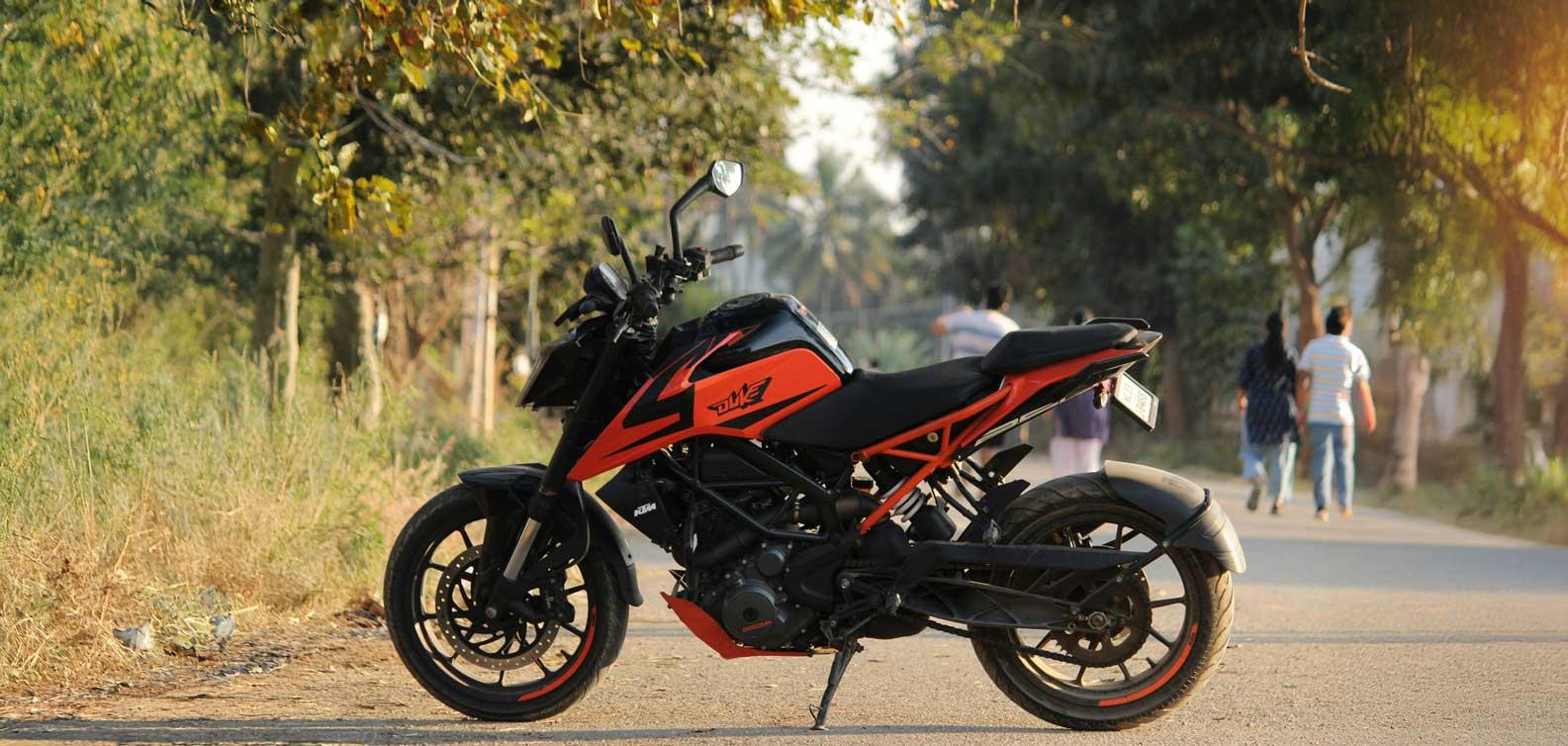
KTM 200 Duke is the enthusiast's pick in this trio: a trellis frame, WP Apex USD forks, a 5-inch TFT dash with turn-by-turn navigation, and Supermoto ABS that lets an experienced rider switch off rear ABS for cornering. The trade-off is real — it costs meaningfully more than either rival here for a fairly small on-paper performance advantage.
Bajaj Pulsar NS200 shares its core 199.5cc liquid-cooled architecture with the KTM (both trace back to the same joint development), and recent updates have added USD front suspension and full-LED lighting while keeping its price well below the Duke's. It's the streetfighter-styled option for buyers who want KTM-adjacent performance without the KTM price tag.
TVS Apache RTR 200 4V trades some outright power-to-weight for the most feature-rich package in this trio: three ride modes (Sport, Urban, Rain), dual-channel ABS, traction control and, on its top variant, a 5-inch TFT cluster borrowed from TVS's larger Apache RTR 310. If electronics and everyday versatility matter more to you than outright numbers, this is the one to test ride first.
Best 250cc-Class Bikes
Bajaj Pulsar N250 is the value entry into 250cc territory: an oil-cooled 249.07cc engine putting out 24.5 PS, in a naked streetfighter body, priced close to the top-spec 200cc bikes above it. It's the pragmatic step-up choice if you want more torque than a 200cc naked without a large price jump.
Suzuki Gixxer 250 and Gixxer SF 250 share the same 249cc SOCS (Suzuki Oil Cooling System) engine and the highest power figure among the "commuter-plus" 250s at 26.5 PS. The Gixxer 250 is the naked streetfighter version; the SF 250 adds a full fairing, windscreen and clip-on bars for a sportier riding position, plus an FFV variant compatible with high-ethanol fuel blends up to E85.
Bajaj Dominar 250 is the outlier in this group by design: at 180 kg it's meaningfully heavier than every other bike on this page, and that's deliberate — it's a sports-tourer built for long-distance comfort, with four ride modes (Road, Rain, Sport, Off-Road) and an accessible 800mm seat height. Don't cross-shop it expecting Apache-like flickability; it's tuned for a different job.
KTM 250 Duke (Gen-3) tops this entire comparison on power-to-weight, with 31 PS in a 163kg package. It's also the most expensive bike in this guide by a clear margin. If outright performance is your only criterion, this is the answer — but it's a genuinely pricier proposition than everything else covered here.
Hero Xtreme 250R: The Hero Xtreme 250R deserves a mention on its own terms: it's a current, well-established 249.03cc liquid-cooled DOHC motorcycle producing roughly 29.5 PS and 25 Nm, priced from around ₹1.66–1.80 lakh ex-showroom, with a TFT display, dual disc brakes and ABS as standard. It's launched and selling since 2023 — this isn't a brand-new or unverified product — and it comes up as a direct rival in nearly every current comparison for the Gixxer 250, Pulsar N250, Dominar 250 and KTM 250 Duke.
On power-to-weight alone (29.5 PS / roughly 168 kg ≈ 0.176 PS/kg), it would sit just behind the KTM 250 Duke and ahead of both Gixxer variants in the table above. It isn't folded into the main comparison table because it wasn't part of this package's approved specification set, but leaving it out entirely would make this guide meaningfully less complete for anyone actually cross-shopping the 250cc class today.
Adjacent 210cc–226cc Contenders
These two don't fit neatly into either the 200cc or 250cc bucket, but they're genuinely cross-shopped against both.
TVS Ronin (225.9cc) is built around relaxed, scrambler/cruiser styling rather than outright performance — its 20.4 PS output is the lowest in this entire comparison, and that's the point. It's also the most affordable bike on this page, which makes it a legitimate pick if styling and comfort matter more to you than outright numbers.
Hero Karizma XMR 210 (210cc) sits closer to the performance end: a 210cc liquid-cooled engine with an oil cooler, putting out roughly 25.5 PS, positioned by Hero as a sport-touring machine capable of sustained 110–120 km/h highway cruising. Its power-to-weight ratio actually beats the Pulsar NS200 and sits close to the KTM 200 Duke, despite a lower list price than either KTM model in this guide.
Highway Touring and Cruising
The liquid-cooled bikes here — both KTM Dukes, the Karizma XMR and the Dominar 250 — generally hold a steady highway pace with less thermal stress than the oil-cooled and Ram-Air-cooled options, though "less thermal stress" doesn't mean the others can't cruise; it means liquid cooling manages sustained high-load running more consistently in hot Indian conditions.
The Dominar 250 is the closest thing to a dedicated tourer in this entire list: heavier, more relaxed ergonomics, four ride modes and genuine wind protection from its half-fairing. The Karizma XMR is pitched similarly, with owner reports describing comfortable all-day cruising in the 110–120 km/h range. The naked 200cc trio and the Gixxer pair are better suited to shorter highway stretches than to genuine day-long touring, simply because none of them offers meaningful wind protection at speed.
Cooling Systems Explained: Liquid, SOCS and Oil/Ram-Air
Liquid cooling (both KTM Dukes, Karizma XMR, Dominar 250) circulates coolant through the engine to manage heat, which generally handles sustained high-rpm or high-load running most consistently — at the cost of added weight and servicing complexity (coolant checks, occasional radiator maintenance).
Suzuki's SOCS (Suzuki Oil Cooling System), used on both Gixxer 250 variants, is a hybrid approach: it uses the engine oil itself, circulated through an external cooler, to manage heat without the added plumbing of a full liquid-cooling system. It's lighter and mechanically simpler than liquid cooling, with a heat-management ceiling somewhat below a dedicated liquid-cooled setup.
Oil-cooling and Ram-Air setups (Pulsar N250's oil-cooled engine, Apache RTR 200 4V's oil-cooled/Ram-Air combination, TVS Ronin's oil-cooled engine) rely more on airflow and a simpler oil circuit. These are the lightest and mechanically simplest of the three approaches, generally adequate for city and moderate-highway use, with the least margin under sustained hard riding in hot weather.
None of these is inherently "better" in an absolute sense — each is a genuine engineering trade-off between thermal headroom, weight, complexity and cost, and the practical difference matters most if you ride hard for extended stretches in hot conditions.
Why 6th Gear Matters (and Why Some Bikes Don't Have One)
Notice the gearbox column in the table above: the KTM 200 Duke, Suzuki Gixxer pair, Bajaj Dominar 250, KTM 250 Duke and Hero Karizma XMR all run 6-speed gearboxes, while the Bajaj Pulsar N250, TVS Apache RTR 200 4V and TVS Ronin use 5-speed units.
A 6th gear generally means a lower cruising RPM at a given highway speed, which translates into less vibration and engine noise on longer runs, and often a small mileage benefit at steady speed. It isn't a guarantee of a smoother ride on its own — gearing ratios and engine character matter just as much — but all else equal, it's a genuine highway-comfort advantage worth checking for if long rides are a priority for you. Slipper clutches, standard on several models here (including the TVS Apache RTR 200 4V and TVS Ronin), separately help smooth aggressive downshifts rather than affecting cruising comfort.
Real-World Mileage and Running Cost
Real-world mileage in this class runs noticeably lower than the ARAI-claimed figures you'll see quoted everywhere, and it varies by riding style far more than in the commuter segment, since these bikes are built to be revved. As a rough guide from owner-reported data gathered across these models: expect city riding in the high-20s to mid-30s km/l range for most bikes here, with the Pulsar N250 and Apache RTR 200 4V trending toward the higher end of that band and the KTM twins and Dominar 250 toward the lower end, given their heavier weight and performance focus. Real highway cruising mileage tends to run a little higher than city mileage across the board, since sustained steady-throttle running is more efficient than stop-start traffic.
Don't take any single "kmpl" figure quoted for these bikes as a guarantee for your own riding — throttle discipline changes the outcome here more than it does on a 100cc commuter.
Pillion Comfort and Everyday Practicality
The Dominar 250 and Karizma XMR are the most pillion-friendly bikes in this group, both built with genuine two-up touring in mind rather than as an afterthought. The TVS Ronin's cruiser-influenced seat is comfortable for relaxed riding but less suited to spirited two-up cornering. The naked 200cc trio and Gixxer pair are competent but not standout for pillion comfort — none of them is a dedicated tourer, and it shows in seat padding and passenger legroom more than in outright capability.
Best by Budget and Rider Persona
Value streetfighter: Bajaj Pulsar NS200 — KTM-adjacent performance at a meaningfully lower price.
Highway tourer: Bajaj Dominar 250 — built around comfort and range, not lap times.
Outright performance: KTM 250 Duke (Gen-3) — the best power-to-weight ratio in this entire comparison, at the highest price.
Commuter/touring compromise: Bajaj Pulsar N250 or TVS Apache RTR 200 4V — meaningful step-up performance without committing to the Dominar's weight or the KTMs' price.
Styling and comfort over numbers: TVS Ronin — the most affordable bike here, built for relaxed riding rather than speed.
Discontinued Models, Rumours and What's Actually True
Yamaha FZ25: discontinued in India. Yamaha withdrew it from the market after it failed to meet the BS6 Phase 2 emission norms that came into force in April 2023, and the company never brought it into compliance. If you see it listed as a current option anywhere, that page is out of date — you can only buy one used now.
Bajaj Pulsar 200T: this doesn't exist as a real Bajaj product. It's a name that has circulated online without ever corresponding to an actual released motorcycle.
Triumph-Bajaj 250cc model: also doesn't exist. Bajaj's joint development with Triumph has produced 400cc products (the Triumph Speed 400 and Scrambler 400X, alongside Bajaj's own 400cc Pulsar NS400Z), not a 250cc motorcycle.
Royal Enfield 250cc motorcycle: doesn't exist in Royal Enfield's current lineup, which starts at 350cc (Hunter 350, Classic 350, Bullet 350) and moves up from there. If you're seeing this searched for, it likely reflects confusion with a different brand's 250cc product.
Sources
Suzuki Motorcycle India — Gixxer 250 & Gixxer SF 250 Official Portals
India Yamaha Motor — FZ25 Commercial Lineup Archive & BS6 Phase 2 Transition
Ministry of Road Transport and Highways (MoRTH) — Rule 123 CMVR 1989 & Notification G.S.R. 200(E)
Autocar India — Two-Wheeler Instrumented Road Test & VBOX Telemetry Archive
Petroleum Planning & Analysis Cell (PPAC) — Daily Retail Fuel Prices
Frequently Asked Questions
Based on 1 rating

Tanushree (Author)
Tanushree is a dynamic business strategist with a knack for driving innovation in startups, especially in Fintech and Edtech. With 9 years of work-ex, an IT engineer from MIT Pune, & a MBA from IIM Bangalore (Marketing & Business Strategy), she’s got the mix of analytical and creative problem-solving.
Read more
Related Blogs
Popular articles are selected from the same backend blog feed.

Best Bikes Under 1 Lakh in India: Price, Mileage & Low-Maintenance Commuters
Compare the best bikes under ₹1 lakh in India by price, real-world mileage, maintenance and safety — from sub-₹60k commuters to 125cc options near ₹1 lakh.
Best Bikes Under 2 Lakh in India: Streetfighters, Cruisers & All-Rounders
Compare the best bikes under ₹2 lakh in India: verified ex-showroom prices, real-world mileage, ABS and hardware, and which model fits your budget.
Best Sports Bikes Under 5 Lakh in India: Track Bikes, Supersports & Top Speed Comparison
Compare the best sports bikes under ₹5 lakh in India by 0–100 km/h, GPS top speed, track ability, electronics, mileage and ownership costs.
Best Electric Scooters Under 1 Lakh in India: Real-World Range, Subsidy & Price List
Compare the best electric scooters under ₹1 lakh by real-world range, battery size, charging, PM E-DRIVE benefits, running cost, build quality and family practi
Best Low-Cost Electric Scooters Under ₹40,000–₹50,000: Non-RTO & Budget Commuters
Compare low-cost electric scooters under ₹40,000–50,000 by price, range, battery type, charging, non-RTO rules, running cost and practical ownership risks.
Best 110cc–125cc Family Commuter Scooters in India: Mileage, Comfort & Price Comparison
Compare the best 110cc and 125cc scooters in India by price, real-world mileage, comfort, storage, braking, running cost and the value of upgrading to 125cc.
Best 150cc–160cc Bikes in India: Mileage, Price, Specs & Performance
Compare India's best 150cc–160cc bikes on mileage, price, power, braking and comfort — Pulsar N160, Apache RTR 160 4V, Xtreme 160R, FZ-S and more.
Best 350cc–500cc Bikes in India: Royal Enfield, Triumph & Mid-Capacity Classics
Compare Royal Enfield, Triumph, Harley-Davidson, KTM and Bajaj bikes from 349cc to 452cc on real price, power, mileage and highway comfort in India.