FASTag Technology 2026: RFID Process & Toll Automation
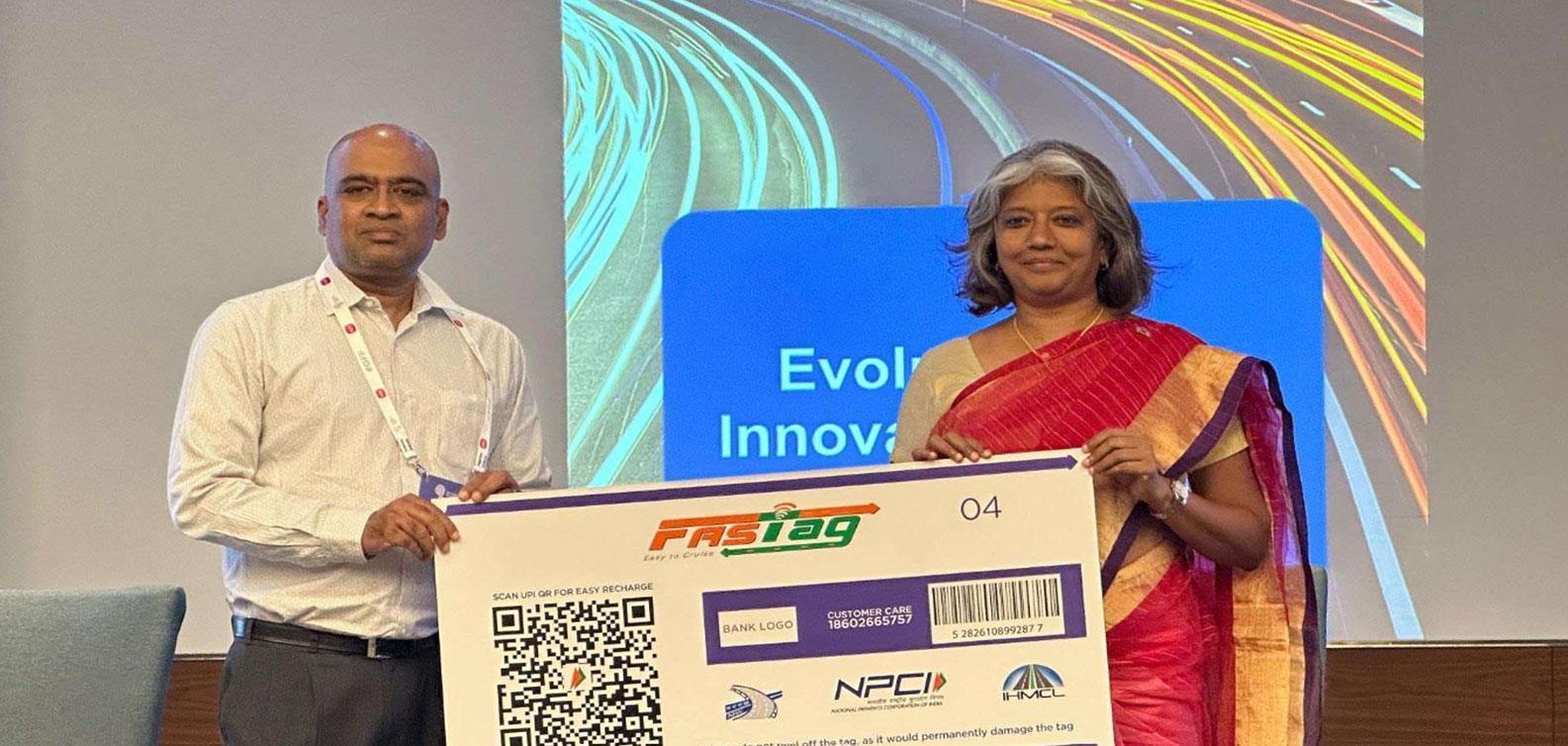
FASTag has revolutionized the way vehicles go through toll gates in India, from slow-moving queues with manual payments to seamless, contactless payments of tolls.
Introduced with a view to aiding the government’s initiative of digital infrastructure, FASTag utilizes passive RFID (Radio Frequency Identification) technology to digitally debit toll payments from a linked wallet or bank account while a vehicle proceeds in a toll lane.
But how does it all work? Why can’t we simply read the FASTag sticker from a few meters away? And who devised such a complicated system that processes millions of toll payments every day?
In this detailed article, we delve into specifics about the technology of FASTag, its constituent components, end-to-end transaction settlement, its RFID band of frequencies, and implementation of the entire system throughout India.
You’ll also learn about the role of various stakeholders — from the RFID reader at the plaza to the banks and the NETC Mapper that makes it all run smoothly.
Whether you’re a curious vehicle owner, a tech enthusiast, or just someone trying to understand what’s behind that little sticker on your windshield, this article will give you a complete, up-to-date look at FASTag technology in India.
FASTag at a glance
FASTag is a digital toll collection system used on India’s national highways and state highways. It consists of a passive RFID (Radio Frequency Identification) tag affixed to a windshield of a four-wheeler and is linked with a prepaid wallet or a direct bank account. The moment the four-wheeler passes through a toll plaza, its tag is scanned digitally and the toll is transmitted without manual intervention.
The tag is unique to vehicles—each FASTag has a link to the Vehicle Registration Number (VRN), vehicle class (car, truck, bus, etc.), and owner’s account. Due to that strong linkage, FASTags can’t be transferred. So, you can’t reuse the same tag for other vehicles, even those of the same proprietor or having similar models.
FASTag aims to facilitate:
- Barrier-less toll collection
- Reduced congestion
- Lower fuel consumption
- Digital, auditable transactions
Since its mandatory implementation for most classes of vehicles, FASTag has become a key enabler of Electronic Toll Collection (ETC) across India.
How FASTag works — end‑to‑end flow
It is interesting to understand how FASTag functions behind the scenes to appreciate the amount of synergy between technology, banks, and infrastructure. Below is stepwise transaction flow from when your four Wheeler enters a toll plaza to when the gate opens up.
Step 1: FASTag Details Captured by Lane RFID Reader
Once you arrive at a toll booth:
- The RFID reader at the lane emits a signal.
- Your windshield FASTag sticker, with its unique Tag ID (TID), responds to the reader.
- Reader stores: Tag ID (TID), Vehicle Registration Number (VRN), and Vehicle class (e.g., LMV, HMV).
This information is sent to acquiring systems at toll plazas.
Step 2: Validation Request Sent to NETC Mapper
The acquirer bank (responsible for managing transactions at the toll plaza) sends a validation request to the NETC Mapper—a centralized service maintained by NPCI (National Payments Corporation of India).
The Mapper:
- Maps the TID to the issuing bank
- Checks the tag status (active, blocked, blacklisted)
- Returns relevant details to the acquirer
Step 3: Fare Computation and Debit Request
- Based on the vehicle class and the toll plaza’s predefined tariff, the acquirer computes the toll fare.
- A debit request is generated and sent to the issuer bank that manages the FASTag user’s wallet/account.
Step 4: Wallet/Account Debited and Final Response
- The issuer bank debits the customer’s FASTag account.
- The bank returns a success or failure response to the acquirer.
- On success, the acquirer sends an approval to the plaza system, and the barrier opens automatically.
- If the balance is insufficient, the tag may be temporarily blacklisted at that plaza until recharged.
Important: Always maintain a minimum balance in your FASTag wallet. A failed transaction may result in the barrier staying down and a manual intervention charge.
FASTag uses which technology?
RFID Technology Explained
FASTag is based on RFID (Radio Frequency Identification) — specifically Passive UHF RFID. Unlike active RFID tags that require a power source, passive tags are powered by the electromagnetic field emitted by the RFID reader. This makes FASTags:
- Lightweight
- Maintenance-free
- Cost-effective
What Frequency Does FASTag Use?
In India, FASTag operates in the UHF (Ultra High Frequency) band between 865–867 MHz, which is:
- Approved for Electronic Toll Collection (ETC) use
- Compliant with Indian wireless communication regulations
- Suitable for long-range reading (up to several meters)
- Capable of supporting multi-lane, high-speed vehicle reads
Why UHF?
- Longer Read Range: Crucial for high-speed lanes at toll plazas.
- Multi-lane Reading: UHF allows simultaneous reading of tags in adjacent lanes.
- High-Speed Compatibility: Can read tags on moving vehicles quickly and reliably.
- Better Performance in Motion: Unlike HF (High Frequency), UHF is more tolerant of vehicle movement and angles.
In short, UHF Passive RFID is perfectly suited to India’s high-traffic and fast-moving tolling environment.
Who introduced FASTag in India? A brief history
The Pilot Phase
FASTag was first tested on the Ahmedabad–Mumbai corridor of the Golden Quadrilateral of the Ministry of Road Transport and Highways (MoRTH). It was pilot-tested in 2013–2014 with a vision to study feasibility for Electronic Toll Collection (ETC) in India.
Development and Standardization
To roll out across the nation, National Highway Authority of India (NHAI) and Indian Highways Management Company Limited (IHMCL) partnered with National Payments Corporation of India (NPCI).
Key contributions:
- NPCI developed the National Electronic Toll Collection (NETC) system as the clearinghouse.
- Standardized protocols and data formats were defined to enable interoperability across toll plazas and banks.
Milestones in FASTag Evolution
- 2014–2016: Initial rollout of FASTag at select plazas on NH corridors.
- 2017: FASTag lanes made mandatory at national toll plazas.
- 2019: FASTag became compulsory for all new vehicles sold after December 1.
- 2021: 100% tolling via FASTag mandated across all NHAI-operated plazas.
- 2025: Integration with parking payments, city tolls, and vehicle tracking under progress.
Today, over 40+ banks and payment platforms issue FASTags, and the system handles millions of transactions daily.
Components of the NETC ecosystem — who does what
The FASTag system operates through a coordinated ecosystem of hardware, software, banks, and infrastructure entities. Here’s a snapshot of the major components and their roles:
| Component | Role | Key Data Handled |
| FASTag (RFID Sticker) | Passive UHF tag fixed on vehicle windshield | Tag ID (TID) |
| Lane Reader/Plaza System | Captures tag info as vehicle enters toll lane | TID, Vehicle Class, VRN |
| Acquirer Bank | Handles plaza-side transactions, computes fare | Validation request, Debit request |
| NETC Mapper (NPCI) | Central mapping of tag to issuer bank, returns tag status | Tag status, Issuer bank, Wallet ID |
| Issuer Bank | Debits wallet/account linked to the FASTag | Customer balance, Debit response |
Each player performs a critical step in enabling real-time, accurate, and automated toll processing across India.
FASTag Benefits and operational notes
FASTag has transformed India’s tolling system by making it faster, more transparent, and far less congested. Here are the key benefits:
1. Barrier-less Toll Collection
Vehicles can pass through toll plazas without stopping, reducing travel time and fuel wastage.
2. Reduced Congestion
With automated processing, FASTag helps reduce traffic build-up at toll lanes, especially during peak hours.
3. Digital Audit Trails
All transactions are recorded and can be tracked in real-time via apps and bank portals, enhancing transparency.
4. Automated Accounting
No need to carry cash or calculate change — toll fare is auto-deducted from your linked wallet or account.
5. Environmentally Friendly
Reduced engine idling and faster processing mean lower carbon emissions at toll booths.
Operational Notes
- FASTags are vehicle-specific—don’t transfer them between vehicles.
- Tags must have sufficient balance or an active pass to avoid rejections.
- Blacklisted tags at plazas can result in delays or fines—check status regularly.
- Always install the tag in the correct position to ensure successful scans.
Frequently Asked Questions
1. Does FASTag work without internet at plazas?
Toll plazas are equipped with local systems that connect to acquirer networks, which then communicate with the NETC platform. While the RFID reading is contactless, network connectivity is required for final transaction authorization. However, some plazas may have offline fallback mechanisms for temporary issues.
2. Can one tag be used on multiple vehicles?
No. A FASTag is allotted to a specific vehicle registration number and class. Reuse of a FASTag on other vehicles is not allowed by NETC guidelines and can result in blacklisting.
3. What frequency does FASTag use?
FASTag uses the 865-867 MHz band of UHF, assigned by India’s wireless authorities for ETC. It allows for quick, efficient, and long-range scanning.
4. Can I use FASTag outside India?
FASTag is currently limited to India’s tolling network. Interoperability globally is contemplated but not implemented to 2025.
5. What happens if my tag is damaged?
A damaged FASTag can fail to scan. You must replace the tag through your issuer and ensure the old one is deactivated.

Final Thoughts
FASTag is not just a sticker—it’s the digital passport of your vehicle across India’s highways. Powered by passive UHF RFID, with connectivity to a real-time bank and validation system, and enabled over the NETC platform, FASTag is a brilliant synergy of technology, convenience, and governance.
From toll plaza RFID readers to NPCI’s Mapper to your bank’s digital wallet, every one of these components plays its role in providing smooth, seamless tolling to millions of vehicles every day.
With India moving towards intelligent transportation systems and smart mobility, FASTag is taking center stage—one toll-free hurdle at a time.
Based on 0 ratings

Tanushree (Author)
Tanushree is a dynamic business strategist with a knack for driving innovation in startups, especially in Fintech and Edtech. With 9 years of work-ex, an IT engineer from MIT Pune, & a MBA from IIM Bangalore (Marketing & Business Strategy), she’s got the mix of analytical and creative problem-solving.
Read more
Related Blogs
Popular articles are selected from the same backend blog feed.


Best Bikes Under 1 Lakh in India: Price, Mileage & Low-Maintenance Commuters
Compare the best bikes under ₹1 lakh in India by price, real-world mileage, maintenance and safety — from sub-₹60k commuters to 125cc options near ₹1 lakh.
Best Bikes Under 2 Lakh in India: Streetfighters, Cruisers & All-Rounders
Compare the best bikes under ₹2 lakh in India: verified ex-showroom prices, real-world mileage, ABS and hardware, and which model fits your budget.
Best Sports Bikes Under 5 Lakh in India: Track Bikes, Supersports & Top Speed Comparison
Compare the best sports bikes under ₹5 lakh in India by 0–100 km/h, GPS top speed, track ability, electronics, mileage and ownership costs.
Best Electric Scooters Under 1 Lakh in India: Real-World Range, Subsidy & Price List
Compare the best electric scooters under ₹1 lakh by real-world range, battery size, charging, PM E-DRIVE benefits, running cost, build quality and family practi
Best Low-Cost Electric Scooters Under ₹40,000–₹50,000: Non-RTO & Budget Commuters
Compare low-cost electric scooters under ₹40,000–50,000 by price, range, battery type, charging, non-RTO rules, running cost and practical ownership risks.
Best 110cc–125cc Family Commuter Scooters in India: Mileage, Comfort & Price Comparison
Compare the best 110cc and 125cc scooters in India by price, real-world mileage, comfort, storage, braking, running cost and the value of upgrading to 125cc.

Best 150cc–160cc Bikes in India: Mileage, Price, Specs & Performance
Compare India's best 150cc–160cc bikes on mileage, price, power, braking and comfort — Pulsar N160, Apache RTR 160 4V, Xtreme 160R, FZ-S and more.
Best 200cc–250cc Performance Bikes in India: Power, Mileage & Highway Cruising
Compare India's best 200cc–250cc bikes on power-to-weight, real-world mileage, highway cruising and price, with the 200cc and 250cc classes covered together.