Electric Scooters/Bikes Without License in India: Key Facts
An electric scooter without a license in India is any two-wheeler with a motor output of 250W or less and a top speed capped at 25 km/h. Under the Central Motor Vehicles Rules (CMVR), such vehicles are classified as non-motorized and do not require a driving license, RTO registration, or number plate.
Electric scooters and bikes have been kicking up dust across the streets at full throttle. After all, they remain at the heart of urban commuting in major metro cities all across India.
Eco-friendly, cost-effective, and easy to handle: they remain a rage for all the right reasons. Hence, a pressing question looms across search engines (no, not auto engines) at all times for curious customers: “Do I need a license for an electric scooter?”.
So what’s the answer? Well, just as always (and to cut a long story short): It depends.
That’s right. Whether that’s a yes or no depends upon…if the vehicle meets thresholds of 25 km/h and 250W. Anything that’s below this is classified as unregistered and is exempt from the usual licensing and RTO registration formalities.
Do you feel that we’re getting too verbose? Don’t worry we’ll cut it short.
In this article, we break down exactly what this means and much more. What scooters are a good buy in this category and is it worth the price? Let’s find out.
Legal Overview: License & Registration Explained
The first question is perhaps the most pressing so let’s start there: Which electric bikes are exempt from mandatory licenses?
Under the Indian Motor Vehicles Act, electric two-wheelers that have a maximum speed of 25 km/h and a motor output of 250W or less are exempt from mandatory licensing and registration. These vehicles qualify as electric scooters without registration.
Of course, for many potential buyers, this means eradicating the hassles of paperwork! While higher-powered models require full registration, these low-speed models are considered safe for urban commuting. If you want to learn more as to why and how; you can read more here .
Who Can Ride Without a License?
Anyone aged 16 years or older can legally ride a low-speed electric scooter (≤25 km/h, ≤250W) in India without a driving license.
These scooters are particularly popular among students, senior citizens, homemakers, and short-distance office commuters who don’t want the hassle of RTO paperwork. Their lightweight design and simple controls make them beginner-friendly across all age groups.
If you are below 16 years of age, you are not permitted to ride even a low-speed electric scooter on public roads. Parents should verify age eligibility before purchasing for a minor. For all riders, wearing a helmet is strongly recommended — some states legally require it even for low-speed vehicles.
No Subsidy: What Non-RTO Buyers Miss
One important trade-off that most buyers overlook: non-RTO electric scooters are not eligible for government EV subsidies like the PM E-DRIVE scheme. These benefits apply only to registered, high-speed electric vehicles that comply with full RTO norms.
This means you cannot claim any subsidy rebate at the time of purchase for a ≤250W / ≤25 km/h scooter.
Key Factors to Consider When Choosing a Low-Speed Electric Vehicle
Ready to take the plunge on getting your license-free ride? When selecting your next license-free electric scooter, all you have to do is consider the following criteria:
- Motor Power: Ensure the motor output is 250W or below.
- Top Speed: Must be capped at or below 25 km/h.
- Battery Range: Look for adequate travel range per charge.
- Charging Time: Faster charging can enhance convenience.
- Price: Consider your budget while comparing models.
- Build Quality: Durability and design are key.
- After-Sales Service: The availability of service centers is critical.
It is vital that you make a wise decision. EVs are an investment for you and the planet and the right bike, based on your needs, will last you a considerable amount of time.
Before You Buy: Quick Verification Checklist
Don’t just take the seller’s word for it. Use this checklist before paying:
✅ Check the official spec sheet — confirm motor output ≤250W and top speed ≤25 km/h in writing
✅ Ask for a written invoice that identifies the scooter as a non-registered / non-RTO vehicle
✅ Verify there is no speed-unlock feature (app-based or hardware)
✅ Confirm local service availability — check if a service centre exists within 20 km
✅ Test the brakes before leaving the showroom
✅ Check charging cable quality — inspect for heat-safe build and socket fit
✅ Avoid models with vague speed claims like “up to 45 km/h optional mode”
If a seller cannot provide written spec confirmation, walk away.
Top 10 Electric Scooters & Bikes You Can Ride Without License/Registration
Looking for a compiled list of the coolest bikes available to ride without a license?
Well, consider your wish granted.
Here is a detailed list of 15 popular electric scooters and bikes that qualify in the genre of electric scooters without registration. Each of these bikes falls under the regulatory thresholds and is designed for hassle-free commuting.
-
Ujaas eGo
-
- Specifications: 250 W motor | Top speed 25 km/h | Range 60–75 km | Charging time 6–7 hours | Lead-acid battery
- Pros: Affordable, lightweight, low maintenance
- Cons: Slow speed, limited features and build finish
- Price: ₹34,880–₹41,595 (ex-showroom)
- Source: Ujaas Energy – eGo
- Specifications: 250 W motor | Top speed 25 km/h | Range 60–75 km | Charging time 6–7 hours | Lead-acid battery

-
-
Hero Electric Flash LX
-
- Specifications: 250 W BLDC motor | Top speed 25 km/h | Range 85 km | Charging time 4–5 hours | 51.2 V 30 Ah Li-ion battery
- Pros: Trusted brand, decent range, easy to handle
- Cons: Minimal features, basic design
- Price: ₹59,640 (ex-showroom)
- Specifications: 250 W BLDC motor | Top speed 25 km/h | Range 85 km | Charging time 4–5 hours | 51.2 V 30 Ah Li-ion battery

-
-
Detel Easy Plus
-
- Specifications: 250W BLDC Hub Motor | Top speed 25 km/h | Range ~60 km | Charging time ~5.5 hours | 48V 20Ah Li-ion battery | Kerb weight ~75 kg
- Pros: Budget-friendly, ultra-lightweight (75 kg), one of the most affordable non-RTO low-speed EVs in India, no licence/registration required (25 km/h cap)
- Cons: Basic features (drum brakes, basic digital console), limited after-sales network in smaller cities, pedal-assisted moped category (not a full scooter)
- Price: ~₹39,999–₹46,999 (ex-showroom)
A popular entry-level electric moped for short city commutes, ideal for those seeking a no-licence, no-registration low-speed EV at a minimal cost.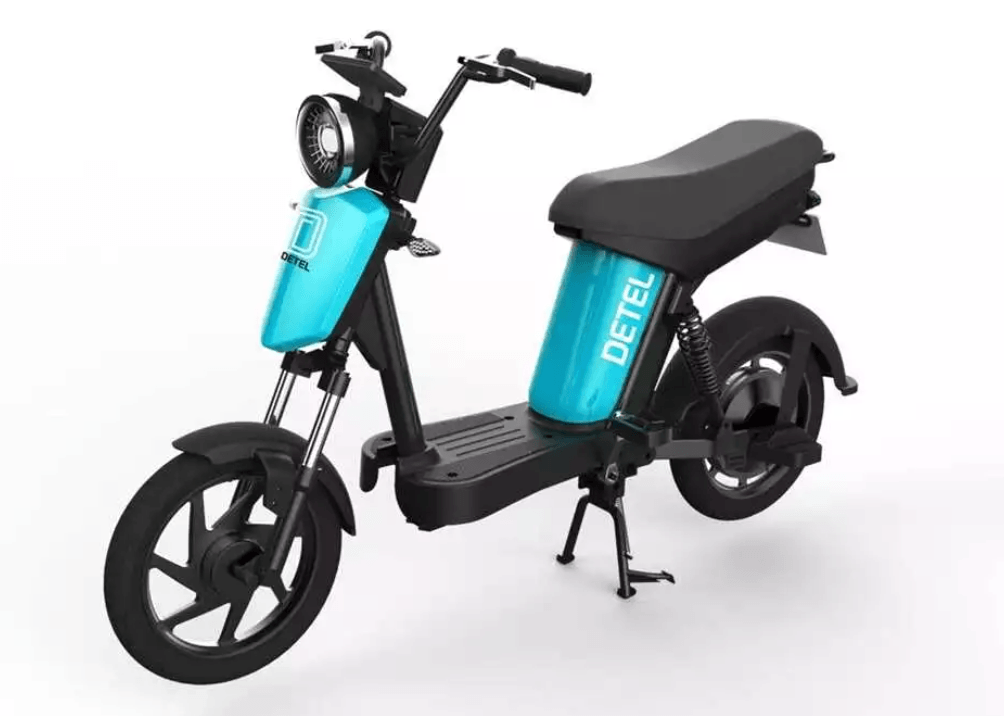
- Specifications: 250W BLDC Hub Motor | Top speed 25 km/h | Range ~60 km | Charging time ~5.5 hours | 48V 20Ah Li-ion battery | Kerb weight ~75 kg
-
-
Ampere V48
-
- Specifications: 250 W motor | Top speed 25 km/h | Range 55–60 km | Charging time 5–6 hours | 48 V battery
- Pros: Budget-friendly, light and compact, low running cost
- Cons: Limited power output, short range on lead-acid version
- Price: ₹40,390 (ex-showroom)
- Source: Ampere Electric – V48
- Specifications: 250 W motor | Top speed 25 km/h | Range 55–60 km | Charging time 5–6 hours | 48 V battery

-
-
Yulu Electric Bike
-
- Specifications: 250 W BLDC hub motor | Top speed 25 km/h | Range 68 km | Charging time 3–4 hours | Li-ion battery
- Pros: Ideal for urban commute, lightweight, compact and eco-friendly
- Cons: Limited speed and performance, minimal storage
- Price: ₹55,555 (ex-showroom)
- Specifications: 250 W BLDC hub motor | Top speed 25 km/h | Range 68 km | Charging time 3–4 hours | Li-ion battery

-
-
Hero Electric Optima
-
- Specifications: Motor ~250 W BLDC, top speed ~25 km/h (for the slow-speed category model).
- Range ~50 km per charge (for entry version) (spec variation exists).
- Charging time ~4-4.5 hours.
- Pros: Economical and durable.
- Cons: Quite basic in terms of digital/connectivity features.
- Price: Approx. ₹57,000.
- Source: autos.maxabout

-
Riding an electric bike without a license for urban commuters is a rising tide. But people have managed to get on it.
If you’re looking to jump in on the wave too, any of these options are a good place to start exploring your ideal match.
Detailed Comparison Table
Want to skip the long read and get a snapshot view of all the bikes in the list? Have no fear, we’ve got your back.
Check below for a detailed side-by-side comparison of the bikes.
| Model | Motor Power | Top Speed (km/h) | Range (km) | Charging Time | Approx. Price (INR) |
| Ujaas eGo LA | 250 W | 25 | 60–75 | 6–7 hours | ₹34,880–₹41,595 |
| Hero Electric Flash LX | 250 W | 25 | 85 | 4–5 hours | ₹59,640 |
| Ampere V48 LA | 250 W | 25 | 55–60 | 5–6 hours | ₹40,390 |
| Yulu Wynn | 250 W | 25 | 68 | 3–4 hours | ₹55,555 |
| Mahindra Gusto 110 (Petrol) | 109.6 cc | — | Mileage 45 km/l | — | ₹48,500–₹61,293 |
| Hero Electric Optima | 250 W | 25 | 50 | 4–4.5 hours | ₹57,000 |
Common Queries Answered
- Is a license required for all electric scooters in India?
Most models classified as an electric scooter without registration do not require a license. However, higher-powered models do require proper licensing. - Do I need insurance for a no-registration electric scooter?
While insurance is advisable, it is not legally mandated for vehicles that fall within the low-speed, low-power category. - What are the consequences of modifying my scooter?
Modifications may change the specifications, potentially voiding the exemption and requiring full registration.Modifications also void your non-RTO exempt status permanently. You cannot simply revert the scooter to “low-speed” mode to escape a police check. The official spec sheet, not the riding mode, determines legal classification — but enforcement can vary.Bottom line: Never modify a non-RTO scooter for higher speed. If you need more speed, invest in a registered EV legally from the start. - Can we drive electric scooter without license?
Yes, if the vehicle is within the regulatory limits. - What is the maximum speed of electric scooter without RTO registration?
These vehicles are limited to 25 km/h. - Which is the best electric scooter without registration?
The best model depends on your priorities and needs. You can refer to our detailed comparison for key features and find the right fit for you. - Does electric scooter need license in India?
For vehicles meeting the threshold, the answer is no. They also qualify as a non RTO electric scooter. - Which electric scooter can drive without license?
All models listed in our table qualify as an electric scooter without RTO registration which you can ride without a licence.
Conclusion
If you’re in the market for an electric bike that doesn’t need a license, look for low-speed electric two-wheelers that meet the 25 km/h and 250W thresholds.
These bikes officially qualify as electric scooters without registration which means no paperwork or licensing hassles attached. But the task goes beyond these two criteria of course when shopping.
When making your choice, consider motor power, range, charging time, and after-sales support before choosing the bike of your dreams. In this article, we’ve listed the top 15 models in a comprehensive comparison table as well.
Ready to take the leap but need some expert guidance? You’re in luck. Ecozaar’s in-house experts simplify the entire process and find your next green bike that meets all your needs. Get in touch today.
Based on 34 ratings

Tanushree (Author)
Tanushree is a dynamic business strategist with a knack for driving innovation in startups, especially in Fintech and Edtech. With 9 years of work-ex, an IT engineer from MIT Pune, & a MBA from IIM Bangalore (Marketing & Business Strategy), she’s got the mix of analytical and creative problem-solving.
Read more
Related Blogs
Popular articles are selected from the same backend blog feed.


Best Bikes Under 1 Lakh in India: Price, Mileage & Low-Maintenance Commuters
Compare the best bikes under ₹1 lakh in India by price, real-world mileage, maintenance and safety — from sub-₹60k commuters to 125cc options near ₹1 lakh.
Best Bikes Under 2 Lakh in India: Streetfighters, Cruisers & All-Rounders
Compare the best bikes under ₹2 lakh in India: verified ex-showroom prices, real-world mileage, ABS and hardware, and which model fits your budget.
Best Electric Scooters Under 1 Lakh in India: Real-World Range, Subsidy & Price List
Compare the best electric scooters under ₹1 lakh by real-world range, battery size, charging, PM E-DRIVE benefits, running cost, build quality and family practi
Best Low-Cost Electric Scooters Under ₹40,000–₹50,000: Non-RTO & Budget Commuters
Compare low-cost electric scooters under ₹40,000–50,000 by price, range, battery type, charging, non-RTO rules, running cost and practical ownership risks.
Best 110cc–125cc Family Commuter Scooters in India: Mileage, Comfort & Price Comparison
Compare the best 110cc and 125cc scooters in India by price, real-world mileage, comfort, storage, braking, running cost and the value of upgrading to 125cc.
Best 150cc–160cc Bikes in India: Mileage, Price, Specs & Performance
Compare India's best 150cc–160cc bikes on mileage, price, power, braking and comfort — Pulsar N160, Apache RTR 160 4V, Xtreme 160R, FZ-S and more.
Best 200cc–250cc Performance Bikes in India: Power, Mileage & Highway Cruising
Compare India's best 200cc–250cc bikes on power-to-weight, real-world mileage, highway cruising and price, with the 200cc and 250cc classes covered together.
Best 350cc–500cc Bikes in India: Royal Enfield, Triumph & Mid-Capacity Classics
Compare Royal Enfield, Triumph, Harley-Davidson, KTM and Bajaj bikes from 349cc to 452cc on real price, power, mileage and highway comfort in India.