
Cheapest Electric Scooters Under ₹30,000 in India: What You Can Actually Buy in 2026
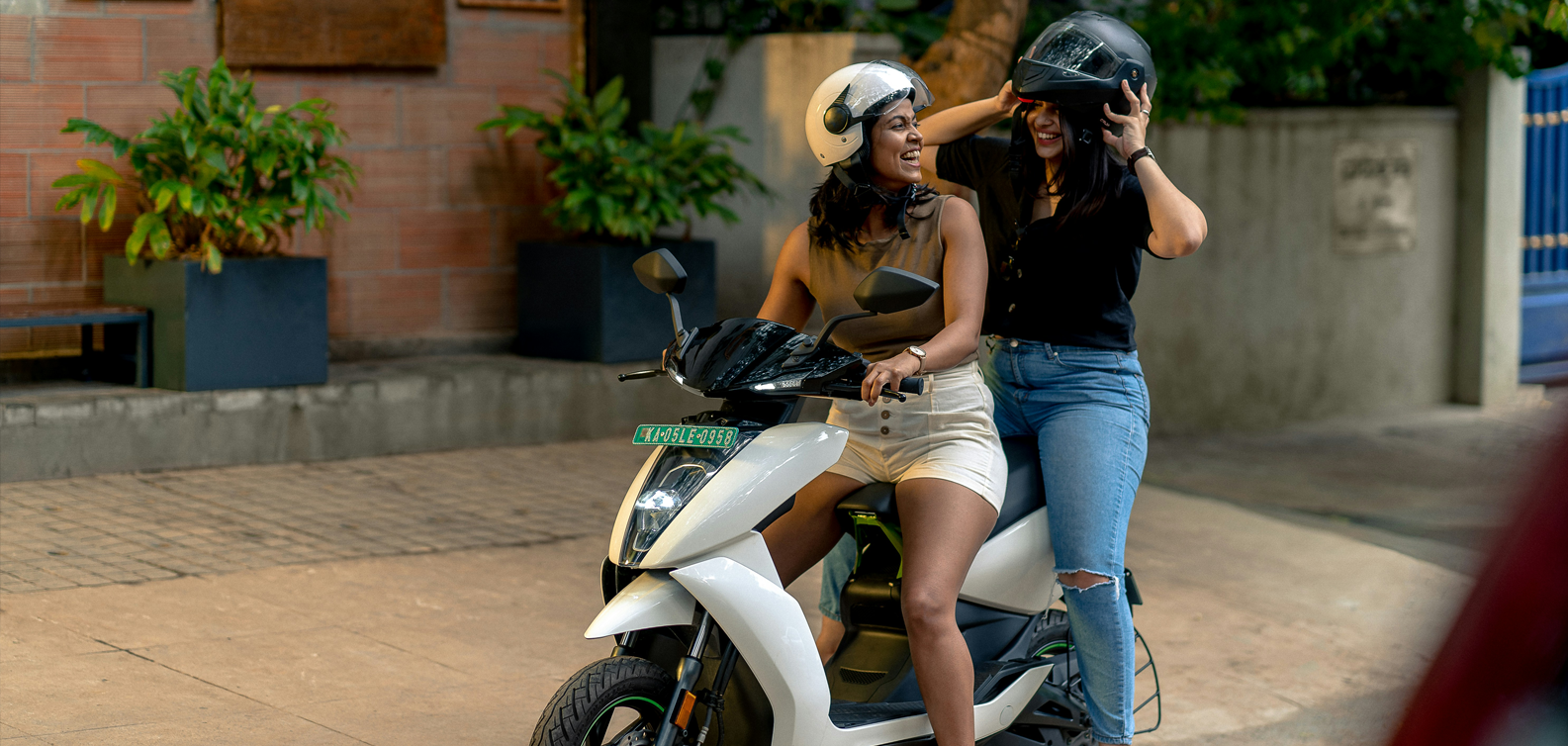
Very few electric scooters cost under ₹30,000 in India. In listings checked on 2 October 2026, the ones that did were low-speed models limited to 25 km/h, such as the Green EV Udaan at about ₹25,000. The Komaki XR1 sits right at the ₹30,000 line. Prices move often, so confirm the live price before you pay.
This budget buys a no-registration scooter with a 250W motor and, often, a lead-acid battery. Below, we explain what that means for the rules, running cost and battery life. We also list the popular names that no longer fit the budget.
What you can actually buy under ₹30,000
ZigWheels' under-₹30,000 list names two scooters, the Green Udaan and the Green Sunny, both rated at 25 kmph. The Komaki XR1 is a borderline third. Prices below were checked on 2 October 2026.
Scooter | Price found | Claimed range | Battery | Notes |
|---|---|---|---|---|
Green EV Udaan (30 km) | ₹24,999 on Green EV's own site | 30 km | Lead-acid; 4–6 hours to charge | 250W, 25 km/h, 51 kg; removable battery and a pedal system |
Green EV Sunny (40 km) | ₹30,999 on Green EV's site; ₹26,499 on ZigWheels | 40 km (60 km version also sold) | Lead-acid in the 60 km listing we checked | Just above or below ₹30,000, depending on the seller |
Komaki XR1 | ₹29,999 at launch; ₹31,499 ex-showroom Delhi on BikeDekho | 70–80 km | Listed as Li-ion on listing sites; Komaki's own page calls it a NAGR battery | 250W motor and pedals; 1-year battery warranty listed |
Some listings still show ₹54,000 for the Udaan. On Green EV's site that figure is the crossed-out "original price", not the selling price.
Sellers also differ on whether the price includes tax. One marketplace listing shows ₹24,380 plus ₹1,219 GST, which makes ₹25,599. Always ask for the final payable amount.
Names that show up in "under ₹30,000" lists but don't fit
Some price-list pages still show the Avon E Plus and Avon E Lite as available scooters under ₹30,000. The other models below are often added to such lists as well.
Model | Price on record | Why it doesn't fit |
|---|---|---|
Avon E Plus | ₹25,000 last listed | Discontinued since April 2024 |
Avon E Lite | ₹28,000 last listed | Discontinued on 19 April 2024 |
Ujaas eGo LA | ₹39,880 | Above budget |
Komaki X One | ₹34,999 to ₹59,999 across variants | Above budget |
Techo Electra Saathi | ₹62,738 last recorded | Discontinued in December 2024 |
Gemopai Ryder | From about ₹70,850 | Above budget |
What "no RTO" means for these scooters
These scooters skip registration because of Rule 2(u) of the Central Motor Vehicles Rules, 1989. A two-wheeled battery-operated vehicle is not deemed a motor vehicle only if a testing agency named in Rule 126 verifies all the conditions. The conditions are:
The motor's 30-minute power is below 0.25 kW (250W).
Top speed is below 25 km/h.
The vehicle has suitable brakes and reflective fittings.
Unladen weight, excluding the battery, is 60 kg or less.
A scooter that meets all of these is outside the registration, licence, third-party insurance and helmet rules for motor vehicles. Industry reports describe the exemption as sparing owners all four. Our guide to low-speed non-RTO electric scooter rules and CMVR exemptions covers this in more detail.
A rule change is proposed, not in force
MoRTH issued a draft notification on 21 August 2026 to amend Rule 2(u). It proposes raising the motor limit from 250W to 600W, keeping the 25 km/h cap and removing the 60 kg weight ceiling. Micro-mobility company Yulu has objected to dropping the weight limit.
Reports say the changes are expected from 1 October 2026. A draft is not law until the final rule is notified, and we found no final notification as of 2 October 2026. Until it appears, the 250W and 60 kg conditions above are the ones that count.
Check that your scooter really qualifies
MoRTH has warned states about vehicles that pass type approval within the 250W and 25 km/h limits but are later sold or modified with bigger motors and batteries that reach 40–55 km/h. If a scooter exceeds the limits, it is a motor vehicle. Registration, licence, insurance and helmet rules then apply to it, along with the usual penalties. Our traffic fine guide shows how those penalties work.
Before you pay, run through this list:
Ask for the testing-agency certificate for that exact model, not just a brochure.
Check that the motor rating is 250W or less and the top speed is under 25 km/h.
Ask whether the price includes GST and delivery.
Ask which battery chemistry it uses, the battery warranty and the replacement price.
Ask where the nearest service point is.
Range: treat the numbers as claims
Every range figure above comes from a maker or a listing site. None is an independent road test. Real-world range varies with riding style, terrain and load. Plan around the lower claim: a 30 km claim suits a short daily commute, not a long one.
Running cost and battery life
Electricity is the small cost. Green EV sells replacement 12V 13Ah lead-acid batteries for the Udaan and Sunny in sets of four. That makes a 48V 13Ah pack, or about 0.62 kWh (48 × 13 = 624 Wh). One listing site gives 0.53 kWh.
Worked example (our assumptions):
suppose a full charge draws 1 kWh from the socket, which is generous and covers charging losses. At ₹8 a unit, that is ₹8 per charge. Use the rate on your own bill, because tariffs differ by state and slab.
The battery is the bigger running cost. Battery University says sealed lead-acid batteries give about 200 to 300 charge cycles, depending on how deeply they are drained and how hot they get. It also notes that each 8°C rise in temperature roughly halves battery life.
Green EV lists the four-battery set at ₹5,999. Spread over 200–300 cycles, that is roughly ₹20–₹30 of battery wear per full charge, against about ₹8 of electricity. Charging every day, 200–300 cycles lasts about 7 to 10 months.
This is our arithmetic from a list price and a general cycle range, not a measured result for the Udaan. Shorter trips that drain less of the battery should stretch the life.
Who should buy one, and who should look elsewhere
A scooter in this band suits short, flat trips at low speed, such as a college run or a quick errand. At 25 km/h you will be slower than most city traffic, so that is a safety judgement to weigh. Wear a helmet even where the law doesn't ask for one.
If you need more speed or range, you move up to registered scooters, which cost more and bring registration and licence rules. Our RTO and two-wheeler buying guides explain that step. Don't count on a central subsidy to bridge the gap: the PM E-DRIVE purchase incentive for electric two-wheelers closed on 31 July 2026.
Sources
Rule 2(u) conditions for non-motor-vehicle status — Central Motor Vehicles Rules, 1989 (copy hosted by Supreme Court Observer) — accessed 2 Oct 2026
Draft Rule 2(u) amendment, 600W, weight limit removal — GKToday — 15 Sep 2026
Yulu objections to the draft; exemption effects — Autocar Professional — 12 Sep 2026
Yulu objection to weight-limit removal — Entrepreneur India — accessed 2 Oct 2026
Conditions retained in the draft (brakes, reflective fittings) — The Pioneer — accessed 2 Oct 2026
Exemptions from registration, licence and helmet; MoRTH warning to states — Autocar India — accessed 2 Oct 2026
Green EV Udaan 30 km price, removable battery, pedals — Green EV official site — accessed 2 Oct 2026
Green EV Sunny 40 km price — Green EV official site — accessed 2 Oct 2026
Replacement lead-acid battery set price — Green EV official site — accessed 2 Oct 2026
Udaan lead-acid battery, charge time — NP Green Electric Vehicles seller listing (IndiaMart) — accessed 2 Oct 2026
Udaan price with GST, weight, 250W, 25 km/h — Moglix — accessed 2 Oct 2026
Komaki XR1 launch price — Mobility Outlook — accessed 2 Oct 2026
Komaki XR1 range, NAGR battery — Komaki — accessed 2 Oct 2026
Sealed lead-acid cycle life and temperature effect — Battery University — accessed 2 Oct 2026
PM E-DRIVE two-wheeler incentive closed 31 July 2026 — EVFY — Sep 2026
Frequently Asked Questions
Based on 2 ratings

Tanushree (Author)
Tanushree is a dynamic business strategist with a knack for driving innovation in startups, especially in Fintech and Edtech. With 9 years of work-ex, an IT engineer from MIT Pune, & a MBA from IIM Bangalore (Marketing & Business Strategy), she’s got the mix of analytical and creative problem-solving.
Read more
Related Blogs
Popular articles are selected from the same backend blog feed.


Patna Traffic Fines in 2026: Helmet, PUC, Triple Riding and E-Challan Rules
Patna traffic fines for helmets, triple riding, PUC and more, with Bihar's 2024 PUC slabs, e-challan steps and the 2026 Lok Adalat settlement scheme.

Fancy Number Plate in Punjab: Price List, E-Auction Steps and Rules
Punjab fancy number plates are sold in weekly Parivahan e-auctions. See reserve prices up to ₹5 lakh, fees, EMD, the weekly calendar and recent Ludhiana bids.

Fancy Number Plate in Tamil Nadu: Current Fees, How to Apply and What Is Changing
Tamil Nadu fancy number plate: current RTO fees, how to apply, what the Oct 2025 e-bidding rule and June 2026 fee draft mean, and HSRP plate rules.

Fancy Number Plates in India: How the Parivahan E-Auction, Reserve Prices and State Rules Work
How fancy number plates work in India: the Parivahan e-auction steps, reserve-price examples, validity deadlines, the residency rule and HSRP norms.

Fancy Number Plate in Delhi: Price List, E-Auction Steps and Rules (2026)
Delhi fancy number reserve prices from ₹5 lakh for 0001 to ₹20,000+ for choice numbers, plus how the e-auction, 90-day allotment and HSRP rules work.

Fancy Number Plate in Odisha: Base Prices, E-Auction and How to Book (2026)
Odisha fancy number base prices from ₹10,000 to ₹1 lakh, the choice-number fee, how to book on Parivahan and the 30-day rule. Checked 12 Oct 2026.
 - Address, Timings & Services.webp)
TN-01 Ayanavaram RTO (Chennai Central): Address, Services, Licence Test and Road Tax
Find the TN-01 Ayanavaram RTO address, how to get a learner licence and book a driving test, TN road tax rates and EV exemption, as of October 2026.

Fancy Number Plate in Assam: How to Book a VIP Number Online
Book a fancy number plate in Assam via the Parivahan e-auction. See how bidding, deposits and registration work, and why reserve prices need a live check.