
Tamil Nadu Drink and Drive Fine: Section 185 Penalty, BAC Limit and Court Process
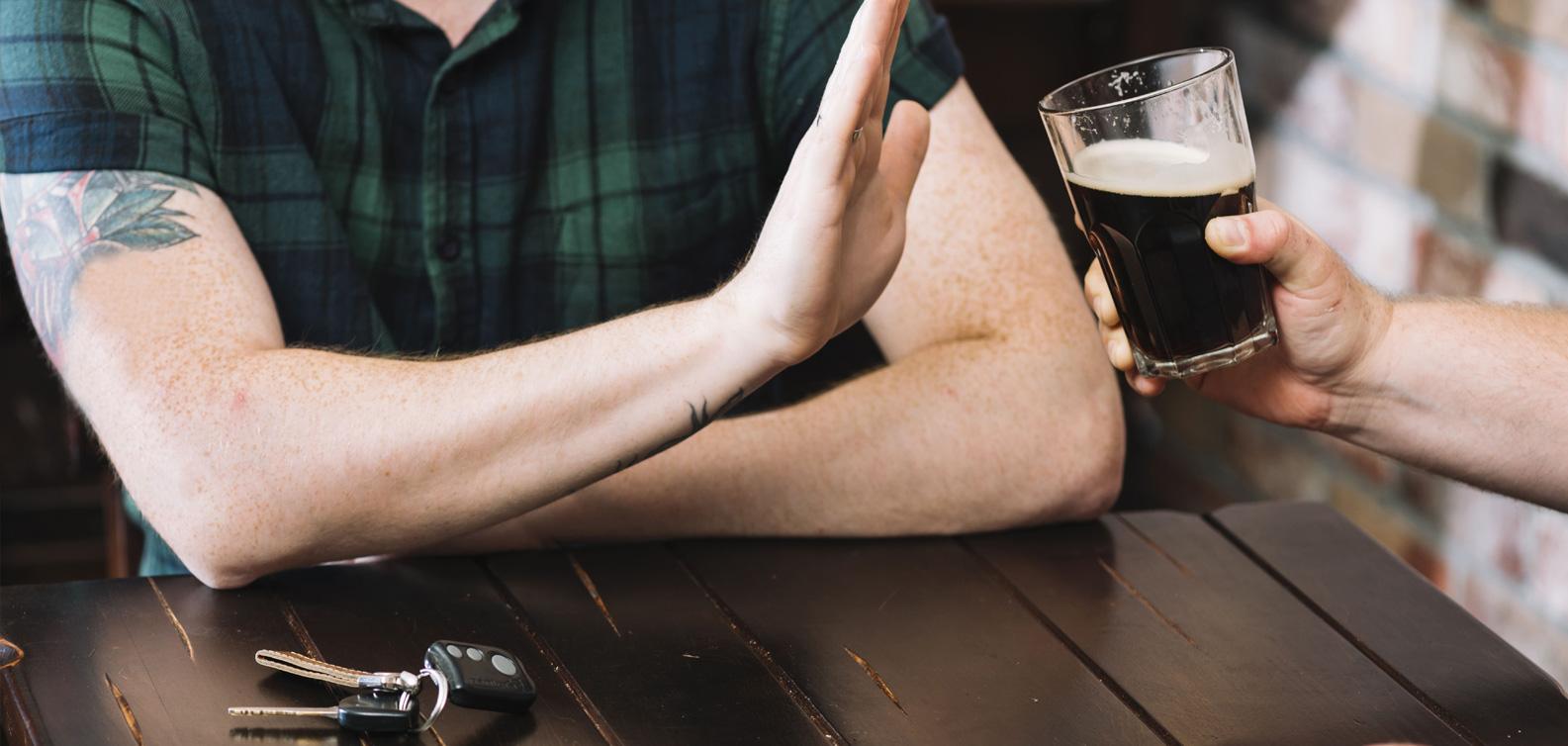
Drink driving in Tamil Nadu attracts a fine of up to ₹10,000, imprisonment of up to 6 months, or both, for a first offence under Section 185 of the Motor Vehicles Act, 1988. This is a non-compoundable criminal offence, so you cannot pay it as a spot fine or on the Parivahan portal — every case goes before a Magistrate. A repeat offence attracts a fine up to ₹15,000 and up to 2 years in jail.
Tamil Nadu Police, including the Greater Chennai Traffic Police (GCTP), run breath-analyser checks across the state, especially on weekend nights. If you are stopped and tested, what happens next depends on your breath-analyser reading, whether you refuse the test, and whether the case is a first or repeat offence. This guide sets out the exact penalty, the court process, and what to expect if your licence or vehicle is involved.
What Is the Legal Alcohol Limit for Driving in Tamil Nadu?
The legal blood alcohol concentration (BAC) limit under Section 185(a) of the Motor Vehicles Act is 30 mg of alcohol per 100 ml of blood (0.03%). Any reading above this on an approved breath analyser, or on a laboratory test, is an offence. This limit applies uniformly across India — it is a central law, not a Tamil Nadu-specific rule.
Before 2019, the law penalised "any quantity" of alcohol, however small. The Motor Vehicles (Amendment) Act, 2019, which took effect on 1 September 2019, replaced that with the current 30 mg/100 ml threshold and also raised the fines described below.
Section 185(b) separately penalises driving under the influence of drugs "to such an extent as to be incapable of exercising proper control" over the vehicle. The fine and imprisonment terms are the same as for alcohol.
Drink and Drive Fine Amount in Tamil Nadu: Section 185 Penalty Table
The table below sets out the current statutory penalties under the Motor Vehicles Act, 1988, as amended by the Motor Vehicles (Amendment) Act, 2019 (effective 1 September 2019). These are the fine ceilings set by law — a Magistrate can impose any amount up to this ceiling, and can order imprisonment, a fine, or both.
Important: Section 185 is a non-compoundable offence under Section 200 of the Motor Vehicles Act. Police and the Parivahan portal cannot accept a spot fine or online payment to close a Section 185 case — only a court can dispose of it. Treat every figure below as a court-imposed maximum, not a fee you can pay on the spot.
Offence | Section | Fine (up to) | Imprisonment (up to) | Compoundable? |
|---|---|---|---|---|
Drink driving, first offence (BAC over 30 mg/100 ml) | 185(a) | ₹10,000 | 6 months | No — court trial only |
Driving under influence of drugs, first offence | 185(b) | ₹10,000 | 6 months | No — court trial only |
Drink or drug driving, second or subsequent offence | 185 | ₹15,000 | 2 years | No — court trial only |
Rash driving on a public way (no injury) | BNS Sec. 281 | ₹1,000 | 6 months | Case-dependent |
Endangering life/safety, hurt caused | BNS Sec. 125(a) | ₹5,000 | 6 months | Case-dependent |
Endangering life/safety, grievous hurt caused | BNS Sec. 125(b) | ₹10,000 | 3 years | Case-dependent |
Death caused by rash/negligent driving | BNS Sec. 106(1) | Fine + imprisonment | 5 years | No |
Death caused by rash/negligent driving, driver flees without reporting | BNS Sec. 106(2) | Fine + imprisonment | 10 years | No |
Note: the "second or subsequent offence" penalty under Section 185 has no time window attached to it under current law — the earlier "within three years" limitation was removed by the 2019 amendment. A prior Section 185 conviction from any point in the past can trigger the higher second-offence penalty.
The Bharatiya Nyaya Sanhita (BNS), 2023 replaced the Indian Penal Code on 1 July 2024. Sections 106, 125 and 281 above are the BNS provisions that apply if a drunk driving incident causes injury or death — these sit alongside, not instead of, the Section 185 charge under the Motor Vehicles Act.
Two-Wheeler vs Four-Wheeler: Is the Fine Different?
No. Section 185 applies identically to every class of motor vehicle. A two-wheeler rider and a car or SUV driver face the same fine ceiling (₹10,000 for a first offence), the same maximum jail term (6 months), and the same minimum licence disqualification period. There is no reduced or "two-wheeler" rate for drink driving anywhere in the Motor Vehicles Act.
Breath Test, Refusal and Blood Test: What the Law Actually Allows
At a checkpoint, an authorised police officer can require you to take a breath-analyser test. If your reading exceeds 30 mg/100 ml, you can be arrested without a warrant under Section 202(1) of the Motor Vehicles Act, which specifically covers offences under Sections 184, 185 and 197.
Refusing to give a breath sample is itself an offence, and a separate arrest power under Section 203 applies to that refusal. Once arrested in connection with a Section 185 offence, the law requires that you be medically examined — including, where necessary, a laboratory blood test under Section 204 — within two hours of arrest. If that examination does not happen within two hours, you must be released from custody. This two-hour requirement is written into the Act itself, not a police guideline.
Can Pillion Riders or Car Passengers Be Fined for Riding with a Drunk Driver?
Tamil Nadu Police, including the Greater Chennai Traffic Police, have publicly stated that they invoke Section 188 of the Motor Vehicles Act (abetment of an offence) against people who knowingly travel with a driver under the influence, applying the same fine that the driver faces — reported as ₹10,000 in Chennai from January 2023 onward. GCTP has said auto and taxi drivers themselves are excluded from this passenger-side enforcement.
This is worth understanding correctly: Section 188 itself is a general abetment provision — it does not name pillion riders or passengers, and no published court ruling has tested whether merely riding along with an intoxicated driver, without more, legally amounts to "abetment." Treat the ₹10,000 pillion/passenger fine as a documented Tamil Nadu traffic-enforcement practice rather than a separately numbered statutory penalty. If you are booked under Section 188, the case is charge-sheeted and dealt with in the same Magistrate court process as the driver's Section 185 case.
Why You Cannot Pay a Drink Driving Challan on Parivahan
Section 185 is excluded from the list of compoundable offences under Section 200 of the Motor Vehicles Act. In practice, this means:
Traffic police in Tamil Nadu cannot accept cash or card payment on the spot for a Section 185 offence.
On the e-challan portal, once a Section 185 case is forwarded, the challan status changes to something like "sent to court for disposal," and the online payment option is disabled.
Tamil Nadu challans are checked and paid through the NextGen eChallan portal (echallan.parivahan.nic.in) rather than the older nationwide portal — but the same rule applies: a non-compoundable offence cannot be closed by online payment on either system.
Virtual Courts do not resolve drink driving cases in Tamil Nadu. Tamil Nadu is registered on the national Virtual Courts platform (vcourts.gov.in) as "Tamil Nadu (Traffic Department)," and it does allow online guilty-plea-and-payment for compoundable traffic offences such as signal jumping or no-helmet cases. Section 185 does not appear on Tamil Nadu's compounding schedule, so it falls outside what Virtual Courts can dispose of. A Section 185 case must be answered before a physical Magistrate court.
In Chennai, Motor Vehicles Act traffic prosecutions are handled by the Metropolitan Magistrate Courts attached to the Egmore, George Town and Saidapet units — for example, the VI Metropolitan Magistrate Court at Egmore and the IV Metropolitan Magistrate Court at Saidapet deal with traffic and negligent-driving cases from their respective jurisdictions. Outside Chennai, the equivalent Judicial Magistrate First Class (JMFC) court in the relevant jurisdiction handles the case. Which specific court you are directed to depends on where you were booked; the notice or summons you receive will state the court and date.
Driving Licence Suspension for a Drink and Drive Case
If you are arrested under Section 185, your driving licence can be seized on the spot and forwarded to the licensing authority under Section 206(4) of the Motor Vehicles Act. The licensing authority then gives you a hearing before deciding on disqualification.
Under Section 19 of the Act, on conviction:
A first offence carries a minimum disqualification period of 3 months.
A second or subsequent offence can lead to revocation of the licence.
This disqualification is a separate administrative consequence from any court-ordered fine or jail term for the Section 185 offence itself. Once ordered, the disqualification is reflected against your licence record in the national driving licence database maintained through Sarathi/Parivahan; confirm the exact status and any reinstatement steps with your regional RTO, since procedures can vary by office. For Chennai residents, the relevant regional RTO — for example, Anna Nagar RTO (TN-02), Thiruvanmiyur RTO (TN-07) or Sholinganallur RTO (TN-14) — handles the licence record update for its jurisdiction.
What Happens to Your Vehicle If You Are Stopped for Drink Driving
When a driver is arrested under Section 185, the arresting officer has discretion under Section 202(3) of the Motor Vehicles Act to take "proper steps for the temporary disposal" of the vehicle — in practice, this usually means the vehicle is held at the police station until it can be safely handed over. This is different from the formal vehicle-seizure power under Section 207, which applies to unlicensed driving, unregistered vehicles and permit violations, not to Section 185 itself.
To get the vehicle released, you will typically need to show:
Proof that the case has been disposed of by the court, or that you have been released and the vehicle custody condition has been met.
The original Registration Certificate (RC).
A valid insurance policy for the vehicle.
A sober person holding a valid driving licence to drive the vehicle away.
Some traffic authorities also charge a towing or vehicle-recovery fee when a vehicle has to be moved or held; the exact amount is set locally and was not possible to confirm from an official Tamil Nadu source for this article; ask the traffic police station holding your vehicle for the current applicable charge before you go to collect it. If your vehicle's registration or number-plate paperwork needs attention while you sort this out, see our guide to Tamil Nadu RTO registration and vehicle rules.
Insurance Impact: Will Your Policy Cover an Accident While Drunk?
Driving under the influence of alcohol or drugs is a standard exclusion in the Own Damage (OD) section of package (own-damage plus third-party) motor insurance policies sold in India. This exclusion traces back to the India Motor Tariff, 2002, and has continued as standard policy wording across insurers since the tariff was withdrawn in 2007.
In practice, this means:
If your insurer establishes — usually through the police record, breath-analyser slip, or hospital blood-test report — that you were driving under the influence at the time of an accident, your Own Damage claim for repairs to your own vehicle can be denied.
The insurer generally still has to pay the third party for injury or property damage; it may then pursue a separate recovery claim against you or the vehicle owner.
Repudiation is not automatic on a bare allegation — the insurer has to establish intoxication with reasonable evidence.
Always check your specific policy's exclusion wording, since insurers can phrase this clause slightly differently.
Criminal Consequences If a Drunk Driving Incident Causes Injury or Death
If a drunk driver causes an accident involving injury or death, the case moves beyond a straightforward Section 185 charge. Since 1 July 2024, the Bharatiya Nyaya Sanhita (BNS), 2023 governs these offences in place of the Indian Penal Code:
BNS Section 281 — rash or negligent driving on a public way that endangers life: up to 6 months' imprisonment, or a fine up to ₹1,000, or both.
BNS Section 125 — a rash or negligent act endangering life or personal safety: up to 3 months and/or ₹2,500 normally; up to 6 months and/or ₹5,000 where hurt is caused; up to 3 years and/or ₹10,000 where grievous hurt is caused.
BNS Section 106(1) — causing death by a rash or negligent act not amounting to culpable homicide: up to 5 years' imprisonment, plus fine.
BNS Section 106(2) — causing death by rash or negligent driving and then fleeing the scene without reporting it to police or a Magistrate: up to 10 years' imprisonment, plus fine. This enhanced 10-year term applies specifically to hit-and-run cases, not to every fatal accident.
These BNS charges are prosecuted separately from, and in addition to, the Section 185 Motor Vehicles Act charge, and a conviction on the BNS charges creates a criminal record in a way that a straightforward Section 185 fine-only disposal typically does not.
Comparing enforcement across states? See our guides to Karnataka drink and drive rules, Hyderabad drink and drive penalties and court process, and Andhra Pradesh drink and drive fines. For vehicle registration and RTO matters in Chennai specifically, check our Chennai RTO guidelines.
Sources
Section 185, Motor Vehicles Act, 1988 (as amended by Act 32 of 2019) — BAC threshold and fine/imprisonment terms — PIB official summary table (PDF) / India Code — accessed 30 September 2026
Section 200, Motor Vehicles Act, 1988 — compoundable offences list, confirming Section 185's exclusion — PIB official summary table (PDF) — accessed 30 September 2026
Greater Chennai Traffic Police enforcement of Section 188 against pillion riders/passengers, ₹10,000 fine, January 2023 — Bangalore Mirror / Times of India Group — accessed 30 September 2026
NextGen eChallan and Parivahan eChallan status behaviour for non-compoundable offences — MoRTH / NIC e-Challan Portal and NextGen eChallan — accessed 30 September 2026
Virtual Courts registration for "Tamil Nadu (Traffic Department)" and exclusion of Section 185 from Tamil Nadu's compounding schedule (G.O.(Ms) No. 758) — Virtual Courts (vcourts.gov.in FAQ) — accessed 30 September 2026
Chennai Metropolitan Magistrate Court jurisdiction (Egmore, George Town, Saidapet units) for traffic/Motor Vehicles Act cases — Official Government Jurisdiction Document (S3WaaS PDF) — accessed 30 September 2026
Bharatiya Nyaya Sanhita, 2023 (Act No. 45 of 2023), Sections 106, 125 and 281 — exact statutory text and effective date of 1 July 2024 — Official Gazette of India Extraordinary (PDF) — 25 December 2023; accessed 30 September 2026
India Motor Tariff, 2002, Section I exclusion (c) — intoxication exclusion for Own Damage cover, its continuation as standard policy wording post-detariffication — New India Assurance (PDF) — accessed 30 September 2026
Frequently Asked Questions
Based on 1 rating

Tanushree (Author)
Tanushree is a dynamic business strategist with a knack for driving innovation in startups, especially in Fintech and Edtech. With 9 years of work-ex, an IT engineer from MIT Pune, & a MBA from IIM Bangalore (Marketing & Business Strategy), she’s got the mix of analytical and creative problem-solving.
Read more
Related Blogs
Popular articles are selected from the same backend blog feed.


Patna Traffic Fines in 2026: Helmet, PUC, Triple Riding and E-Challan Rules
Patna traffic fines for helmets, triple riding, PUC and more, with Bihar's 2024 PUC slabs, e-challan steps and the 2026 Lok Adalat settlement scheme.

Best Mono Suspension Bikes in India for Long Rides (2026)
Mono suspension bikes use a single rear shock absorber positioned centrally for better handling and stability. Top picks in India for 2026 include the Yamaha MT-15 V2 for city use, Suzuki Gixxer SF 250 for touring, and KTM Duke 390 for spor

Fancy Number Plate in Punjab: Price List, E-Auction Steps and Rules
Punjab fancy number plates are sold in weekly Parivahan e-auctions. See reserve prices up to ₹5 lakh, fees, EMD, the weekly calendar and recent Ludhiana bids.

Fancy Number Plate in Tamil Nadu: Current Fees, How to Apply and What Is Changing
Tamil Nadu fancy number plate: current RTO fees, how to apply, what the Oct 2025 e-bidding rule and June 2026 fee draft mean, and HSRP plate rules.

Fancy Number Plates in India: How the Parivahan E-Auction, Reserve Prices and State Rules Work
How fancy number plates work in India: the Parivahan e-auction steps, reserve-price examples, validity deadlines, the residency rule and HSRP norms.

Fancy Number Plate in Delhi: Price List, E-Auction Steps and Rules (2026)
Delhi fancy number reserve prices from ₹5 lakh for 0001 to ₹20,000+ for choice numbers, plus how the e-auction, 90-day allotment and HSRP rules work.

Fancy Number Plate in Odisha: Base Prices, E-Auction and How to Book (2026)
Odisha fancy number base prices from ₹10,000 to ₹1 lakh, the choice-number fee, how to book on Parivahan and the 30-day rule. Checked 12 Oct 2026.
 - Address, Timings & Services.webp)
TN-01 Ayanavaram RTO (Chennai Central): Address, Services, Licence Test and Road Tax
Find the TN-01 Ayanavaram RTO address, how to get a learner licence and book a driving test, TN road tax rates and EV exemption, as of October 2026.