Ola S1 Pro vs Ather 450X: Price, Range, Features 2026
 Share
Share
Are you someone who has been riding high on India’s green mobility wave? If so, you might be grappling with the eternal questions: “Which is the perfect EV two-wheeler choice for me?”
If so, you may be exploring different brands: Ather, Ola, TVS, etc. India is after all, filled with plenty of choice for EVs, and caters to different price ranges and segments. So no matter who you are, there is no doubt a perfect option available for you.
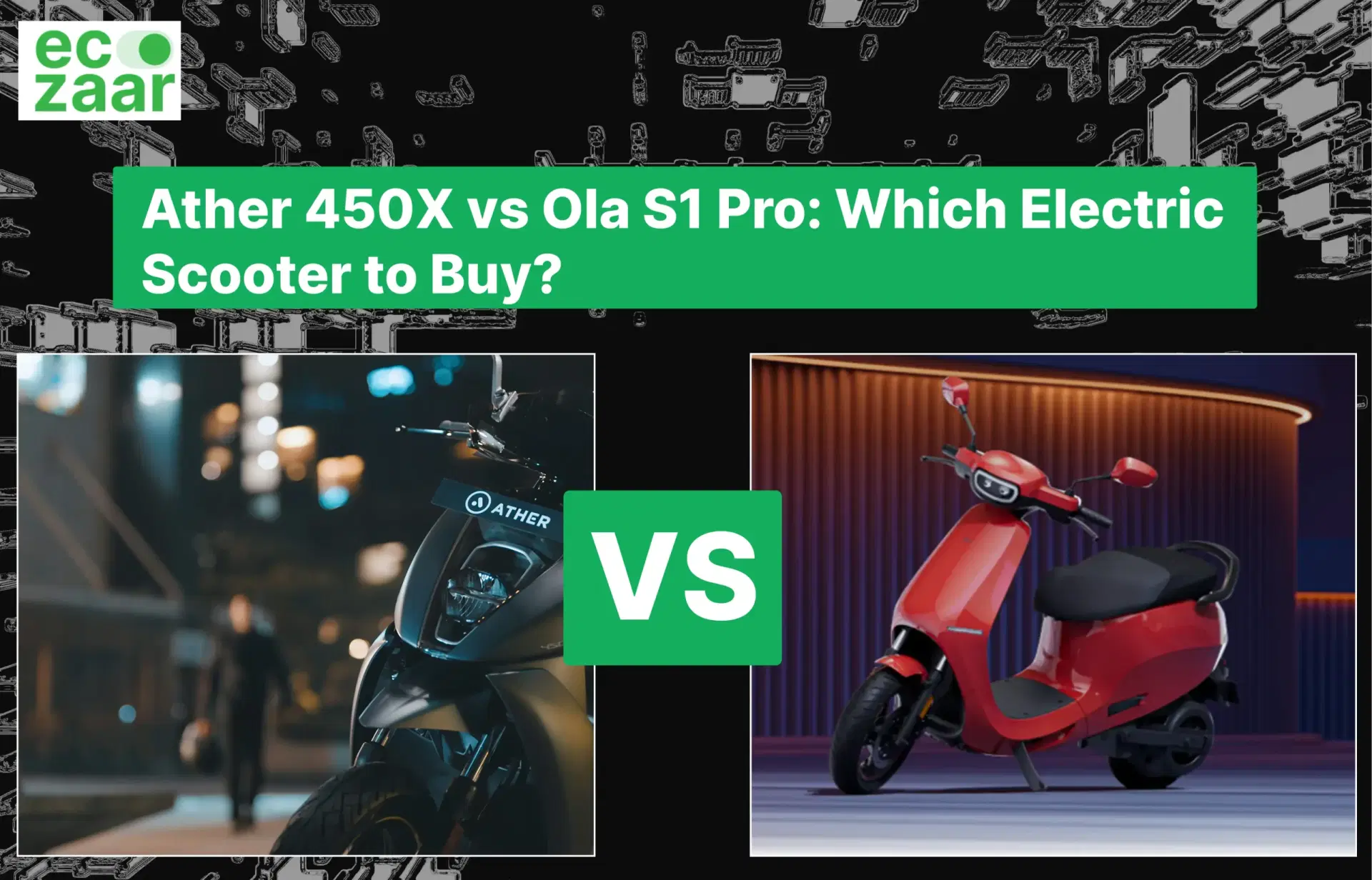
Want us to make the choice easier for you? Let’s start a comparison between two of India’s most popular scooters: The Ola S1 Pro vs the Ather 450x.
This comparison is an interesting one. On paper, both look “premium”, both promise solid range, both are loaded with tech, and both have fanbases that’ll argue like it’s IPL season during Christmas time. But in real life, the best pick depends on what you value: reliable daily range, software maturity, service experience, ride feel, or straight-up performance.
In this guide, we’ll break down the Ather 450x vs Ola S1 Pro debate. We discuss both models across price, range, performance, features, charging, ownership, customer preferences etc.
By the end, you’ll have a clearer understanding of your ideal EV purchase.
Ready to explore? Let’s get started.
Ather 450X vs Ola S1 Pro: Price Comparison (2026)
Prices move frequently because brands tweak variants, offers, and city-wise on-road components. That’s just a fact of life (and the business landscape)
So instead of pretending there’s one “final” number, here’s what the market looks like based on current listings and official pages.
Ather 450X vs Ola S1 Pro:2026 Price Snapshot
| Model | Typical Ex-Showroom Range | Notes |
| Ola S1 Pro | ₹1.21L – ₹1.38L | Variant-dependent (listed range on aggregator pages). |
| Ather 450X | ₹1.55L – ₹1.80L | Multiple variants; higher trims can go up. |
What does this usually mean for buyers?
- Ola often looks cheaper upfront in ex-showroom comparisons.
- Ather can feel pricier because trims and packs typically push the final ticket higher.
- On-road varies heavily by city (insurance, RTO, local fees), so always check your exact on-road before paying a booking amount.
Ather 450X vs Ola S1 Pro: Riding Range & Battery Performance
This is where most people start, and where most of the confusion happens.
Real-world vs “claimed” range: What’s the Debate About?
Brands and portals often show IDC/claimed values, which are not the same as your day-to-day city riding.
Even Ather explicitly separates “IDC range” and practical range in many discussions, and some portals highlight a more “true range” style figure. Make sure to explore the table below:
Range & charging: Quick comparison
So who wins on range?
In most buyer conversations, Ola’s higher claimed range variants look stronger on paper, while Ather’s story is often about consistency and predictable real-world behaviour (especially for city users).
The right question to ask isn’t “highest range”, it’s: How stable is my daily range across traffic, heat, and riding style?
Ather 450X vs Ola S1 Pro: Motor, Top Speed & Acceleration
Ola’s newer S1 Pro pages highlight aggressive performance figures like top speed up to 125 km/h (variant-dependent) and 0–40 km/h in 2.7s.
Ather’s 450X spec sheet leans into a “usable performance” story: top speed 90 km/h, 0–40 km/h 3.3s, peak power 6.2 kW, and torque 26 Nm, which is exactly why it feels punchy in city gaps without feeling twitchy.
Here’s a quick comparison snapshot:
- Top speed: Ola S1 Pro up to 125 km/h vs Ather 450X 90 km/h
- 0–40 km/h: Ola 2.7s vs Ather 3.3s
Real take:
- If your need for speed outweighs everything, Ola often looks more tempting on the spec sheet.
- If your daily route is city chaos and you want clean throttle mapping + a scooter that feels “engineered,” Ather tends to click better for many riders — because its performance is packaged with predictable, traffic-friendly tuning.
Ather 450X vs Ola S1 Pro: Build, Storage & Comfort
This is where the two brands start feeling like they’re designed for different personalities.
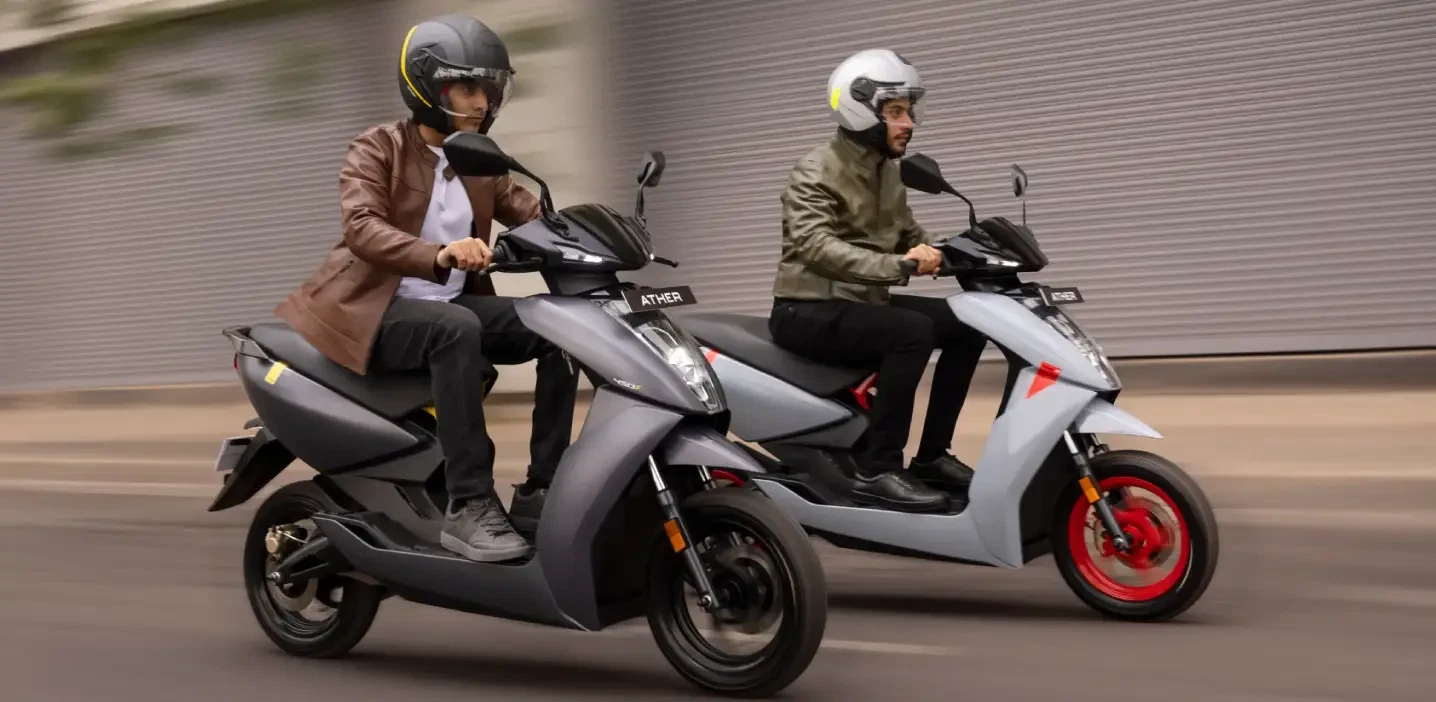
Ather 450X leans towards the ‘sportier’ side of things:
That’s right. It is very much a premium purchase for EV buyers.
You get a more “tight + planted” setup, and Ather’s official spec sheet backs that with key ownership-relevant numbers like 111.6 kg kerb weight and 22L under-seat storage.
(Source: Ather Energy)
Ola S1 Pro takes the “comfort and convenience” approach:
Ola’s official comparison pages consistently push practicality cues like 34L boot space (big difference for helmets/groceries), and the overall positioning is “more space + more features.”
So what does that mean for you?
- If your household needs a “one size fits all” approach (groceries, pillion comfort, occasional longer runs), Ola’s 34L storage advantage is hard to ignore.
- If you want a trendier, “sportier” vibe, and don’t care about max storage volume, Ather’s packaging tends to feel more “rider-first.”
Ather 450X vs Ola S1 Pro: Smart Features & Safety Comparison
Both come equipped with ‘smart features’, but they are often presented and packaged in different ways:
What does Ather excel at?
Ather’s official positioning emphasises a connected ecosystem and software-led ownership (navigation/connected experience depending on variant/pack), plus safety-related tech positioning under its feature suites.
What does Ola excel at?
Ola’s official pages push feature density and performance-led variants, and they also surface safety hardware differences across trims (for example, ABS vs CBS depending on the exact variant).
Want some practical advice? Here’s what you can use:
- If you hate surprises, prioritise software stability + service predictability over “cool features you use twice.”
- If you love features and don’t mind occasional quirks, Ola can feel more “value-packed” on paper.
Ather 450X vs Ola S1 Pro: Charging Speeds, Home Charger, Public Networks
There are a lot of misconceptions regarding the charging demands of these two models. But before we explore that a bit more, let’s clear some common misconceptions.
Charging isn’t just about “how fast”; it’s more about “how convenient”.
While a lot of scooter owners prefer home charging, there is equally a need for a brand to have the best-availible public charging network. Ultimately, that is what will make the difference.
In that sense, Ather’s public network story is very clear: Ather’s Grid is widely positioned as a major advantage, and credible reporting has described Ather as operating thousands of charging points (e.g., 4,000 in India) as part of its charging ecosystem.
Now, in the case of Ola, a charging grid exists as well. But it’s nowhere near as close to Ather. Ola’s own site mentions access to 970+ charging points via its network messaging (availability varies by city and what’s actually operational near you).
(Source: Ola Electric )
So what decision should you practically make? It’s time to explore it in the next section.
Ather 450X vs Ola S1 Pro: Practical Ownership Insights
Now that you’ve finally narrowed down your final choice to these two options, it’s time to make a real decision.
Here is how to go about it, and the things to think about:
- Service experience: It is important. It can make or break EV ownership (because you’re dealing with software + hardware).
- Community support: It matters. Owners often end up using forums and groups to troubleshoot faster.
Between “Ola S1 Pro vs Ather 450x” debate, a common buyer pattern is:
- Pick Ather if you want a tighter product experience and can accept premium pricing.
- Pick Ola if you want maximum specs/features per rupee and can tolerate a little more unpredictability.
And yes—your city’s service network quality matters as much as the scooter. That has to be kept in mind as well. With that said, let’s explore some pros and cons below.
Ola S1 Pro vs Ather 450x: Pros & Cons
| Model | Pros | Cons |
|---|---|---|
| Ola S1 Pro | Often stronger “paper range” and performance claims on newer variants
Typically priced lower than Ather in many variant comparisons Feature-heavy positioning |
Real-world experience can vary more by software version / service experience (depends a lot on city + batch)
The “highest IDC numbers” aren’t the same as stable daily range |
| Ather 450X | Premium, engineered ride feel and consistent city behaviour (strong commuter personality)
Multiple variants (IDC range options shown on listings) Strong motor/torque positioning on official pages |
Typically costs more (especially higher trims)
If your priority is only maximum range-per-rupee, you may feel it’s expensive |
Ather 450X vs Ola S1 Pro: Who Should Buy Which Scooter?
If you want the simplest decision rule:
Choose Ola if…
- You want the most “spec-sheet wow” for the money.
- You care more about range claims, power, and feature density than refined ride feel.
Choose Ather if…
- You want a premium, confidence-in-traffic scooter with a strong engineering vibe.
- You care about consistent day-to-day behavior more than headline numbers.
That’s basically “Ather 450 x vs Ola S1 Pro” debate in one line:
Ola is the louder value proposition, Ather is the calmer “live-with-it-everyday” proposition. What you decide is (like always) dependent on who you are, and what you want.
Frequently Asked Questions
1. What’s the real range difference between Ola and Ather?
Real range depends on speed, mode, load, and temperature. Ola may claim higher IDC ranges on newer variants, while Ather variants list IDC ranges like 126/161 km and are often discussed with more “true range” framing in listings.
2. Is Ather 450X more reliable than Ola S1 Pro?
Reliability depends heavily on batch, city service quality, and updates. Ather’s product positioning leans “refined + engineered”, while Ola leans “feature-packed + aggressive specs”.
3. How much does charging cost?
Mostly depends on your electricity unit rate and how you ride (efficiency changes). For most urban riders, home charging is the biggest cost lever.
4. Which scooter has better resale value?
In India, resale typically rewards consistent ownership experience and service support. City-wise demand matters a lot here—check local listings before deciding.
Conclusion
So, what’s the final verdict?
So if your priority is maximum headline specs and you’re excited by feature density, your needs will likely pull you toward Ola.
But if you want a scooter that feels sorted in traffic, predictable in daily use, and premium in the way it behaves, you will most probably end up with an Ather.
And if you’re still torn, here’s the most practical next step: test ride both back-to-back on the same roads you actually ride every day. That 20-minute ride will tell you more than 200 spec comparisons ever will.
Want more? Stay tuned here at Ecozaar. We help you cut the noise and help you make a confident, informed EV decision—whether you’re comparing models, checking city-wise pricing, or planning long-term ownership.
Based on 1 rating

Tanushree (Author)
Tanushree is a dynamic business strategist with a knack for driving innovation in startups, especially in Fintech and Edtech. With 9 years of work-ex, an IT engineer from MIT Pune, & a MBA from IIM Bangalore (Marketing & Business Strategy), she’s got the mix of analytical and creative problem-solving.
Read more
Related Blogs
Popular articles are selected based on the number of readers