
Jaipur Traffic Fines: Penalty List, Zebra Crossing Challan, E-Challan Payment & Rules
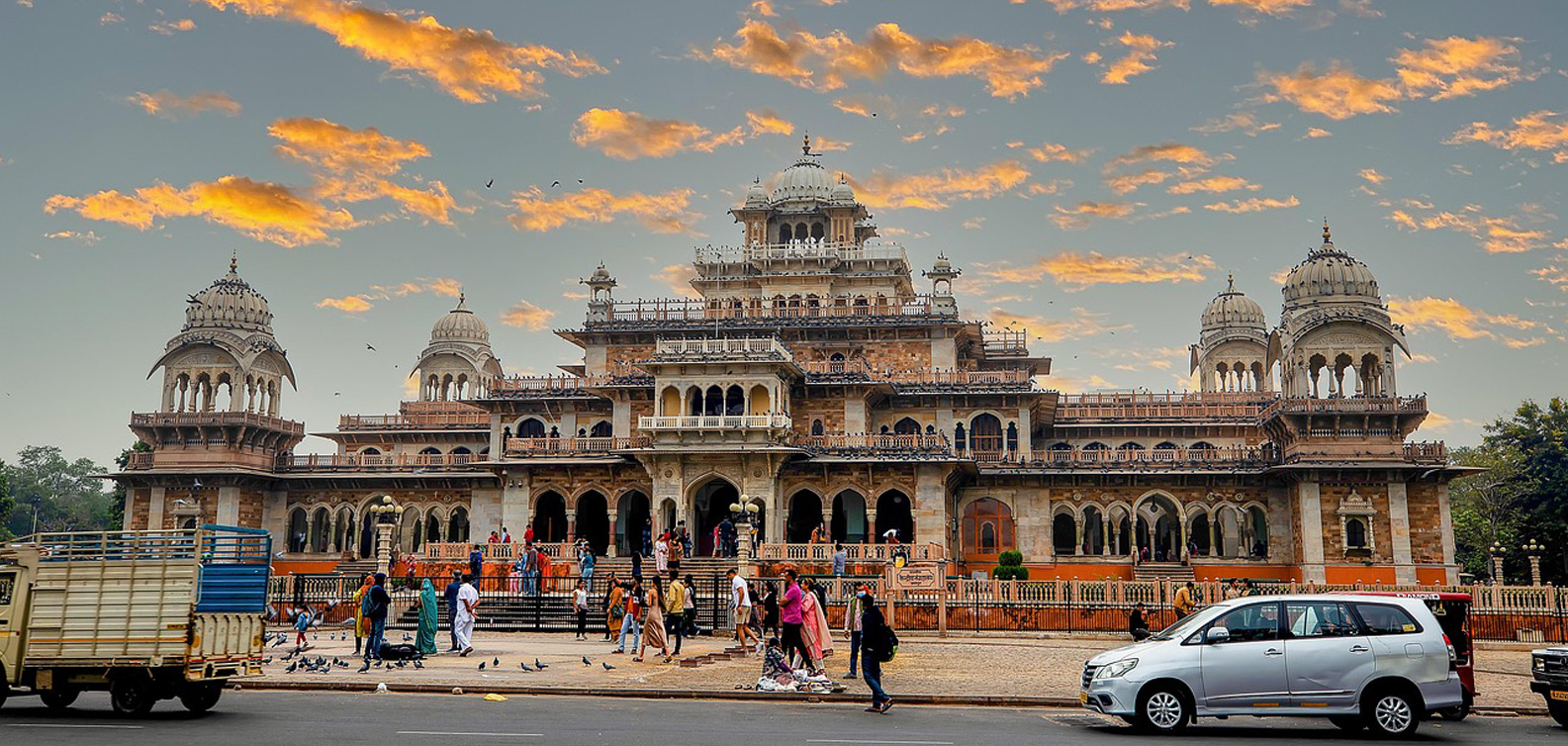
Driving over a stop line or stopping on a zebra crossing at a red signal in Jaipur is punishable under Section 177A of the Motor Vehicles Act, compounded at ₹500 for a first offence and ₹1,500 for a repeat offence, and it is one of the violations Jaipur's camera network now catches automatically. Wrong-side driving is treated more seriously, as dangerous driving under Section 184, with fines from ₹1,000 to ₹5,000. This guide lists the penalties that apply in Jaipur, explains how the city's automated enforcement works, and shows every practical way to check, pay or dispute a challan.
How Jaipur Enforces Traffic Rules
Two agencies matter to you as a driver in Jaipur: the Jaipur Traffic Police, who detect and book violations, and the Rajasthan Transport Department, which maintains your vehicle's records on the Vahan and Sarathi databases. Most compounding of fines — settling an offence by paying a fixed fee instead of going to court — happens under the state's compounding framework, so the amount you actually pay is usually the compounded rate, not the maximum statutory fine.
Jaipur was the first city in Rajasthan to run an AI-powered traffic awareness system. Cameras and displays at signalised junctions flag violations live — including stopping past the stop line or on the zebra crossing — and the city has been moving towards AI-camera coverage at 253 junctions as part of the project rollout. The state-wide backbone for this kind of enforcement is the ABHAY Command and Control Centre, a Rajasthan Police surveillance initiative that links camera feeds, number-plate reading and challan generation.
What this means for you: the old habit of nose-ing forward past the stop line while waiting at a red light is exactly what these cameras are tuned to catch.
Zebra Crossing & Stop Line Challan in Jaipur
If you cross the solid white stop line or let your tyres rest on the zebra stripes at a red light, you can be challaned for contravening regulations made under Section 118 of the Motor Vehicles Act — the rules that cover stop lines, lane discipline and obeying signals — penalised under Section 177A.
First offence: ₹500 (compounded in Rajasthan).
Repeat offence: ₹1,500.
The automated systems in Jaipur don't need a constable standing at the junction. When the signal is red, the camera watches the stop line and the zebra marking; if a vehicle crosses them, a photographic e-challan is generated against the vehicle number, and some junction displays publicly flag the violation in real time.
To stay clear of a ₹500 ticket, stop before the solid white line. If you've already crossed when the light turns red, holding position on the crossing is still an encroachment — the safe move is to clear the zebra markings if it's safe to do so, and never reverse abruptly.
Wrong-Side Driving in Jaipur: Not a ₹500 Offence
A persistent myth — and a costly one — is that driving against the flow on a Jaipur road attracts a minor ₹500 fine. It doesn't. Wrong-side driving is prosecuted as dangerous driving under Section 184 of the Motor Vehicles Act, which carries a fine of ₹1,000 to ₹5,000 and, on repeat offences, the possibility of a licence disqualification.
Traffic police book drivers on divided carriageways and flyover ramps where the wrong-way movement endangers oncoming traffic. On high-speed corridors this is treated as a serious hazard, not a technical violation, so expect the upper end of the range rather than the minimum.
Complete Jaipur Traffic Fines List (2026)
The table below combines the statutory penalties in the Motor Vehicles Act, 1988 (as amended in 2019) with the compounded rates applied in Rajasthan. Compounding means paying a fixed amount to close the matter without a court appearance; the compounded amount can vary with the circumstances of the offence, so treat the figures as the standard rates rather than a guarantee.
Offence | MV Act Section | Statutory Penalty (Central) | Compounded Rate in Jaipur / Rajasthan |
|---|---|---|---|
Stop line / zebra crossing encroachment at red signal | 177A (via s.118 regulations) | ₹500–₹1,000 | ₹500 (1st) / ₹1,500 (repeat) |
Wrong-side driving (dangerous driving) | 184 | ₹1,000–₹5,000 | ₹1,000–₹5,000 |
Riding without helmet (rider or pillion) | 129 / 194D | ₹1,000 + 3-month licence disqualification | ₹1,000 |
Triple riding on a two-wheeler | 128 / 194C | ₹1,000 + 3-month licence disqualification | ₹1,000 |
Red light jumping | 184 / 177A | ₹1,000–₹5,000 | ₹1,000 (1st) / ₹2,000 (repeat) |
Driving without seatbelt | 194B | ₹1,000 | ₹1,000 |
Mobile phone use while driving (handheld) | 184 | ₹1,000–₹5,000 (1st), up to ₹10,000 (repeat) | ₹1,000 (1st) / ₹5,000 (repeat) |
Overspeeding — LMV (cars, bikes) | 183(1) | ₹1,000–₹2,000 | ₹1,000 (1st) / ₹2,000 (repeat) |
Overspeeding — medium/heavy vehicles | 183(2) | ₹2,000–₹4,000 | ₹2,000 (1st) / ₹4,000 (repeat) |
Pollution / PUC violation | 190(2) | Up to ₹10,000, or 3 months' imprisonment, or both + 3-month disqualification | ₹1,000 (1st) / ₹2,000 (repeat) |
Modified / loud ("pataka") silencer | 190(2) / 182(4) | Fine plus possible seizure | ₹1,000–₹5,000 |
Driving without a valid licence | 181 | ₹5,000 | ₹5,000 |
Allowing an unlicensed person to drive | 180 | ₹5,000 (on the owner) | ₹5,000 |
Driving without third-party insurance | 196 | ₹2,000 and/or up to 3 months' jail (1st); ₹4,000 (repeat) | ₹2,000 (1st) / ₹4,000 (repeat) |
Unregistered vehicle / expired RC | 192 | ₹2,000–₹5,000 (1st); up to ₹10,000 / 1 year's jail (repeat) | ₹2,000–₹5,000 |
Juvenile / underage driving | 199A | ₹25,000 + up to 3 years' jail for the guardian/owner; RC cancelled for 12 months; minor barred from a licence until 25 | ₹25,000 + court proceedings |
Drunk driving | 185 | ₹10,000 and/or 6 months' jail (1st); ₹15,000 and/or 2 years (repeat) | Non-compoundable — court only |
Accident: failing to secure medical aid / report to police | 134 / 187 | ₹6 months' imprisonment and/or ₹5,000 fine (s.187) | Court referral |
Obstructive parking / towing | 127 / 201 | Vehicle removed; fine plus towing charges | ₹500 + towing charges |
Two-Wheeler Rules Every Rider Should Know
Under Section 129, both the rider and the pillion must wear a BIS-standard helmet. The fine for riding without one is ₹1,000 under Section 194D, and the Act also provides for a three-month licence disqualification for the offence. The pillion is covered by the same rule — the fine applies to the rider and the pillion alike.
One exemption is written into the law itself: under the proviso to Section 129, a Sikh wearing a turban while riding a motorcycle is not required to wear protective headgear.
Triple riding — carrying more than one pillion on a two-wheeler — is barred by Section 128 and penalised under Section 194C with a ₹1,000 fine, again with the possibility of a three-month licence disqualification. In Jaipur, two-wheelers are among the most camera-visible vehicles on the road, so both helmet and pillion violations are straightforward to capture on camera.
Four-Wheeler Rules: Seatbelts, Speeding & Phones
Seatbelt rules under Section 194B cover the driver and front-seat passenger; the fine is ₹1,000. Speeding fines differ by vehicle class: ₹1,000–₹2,000 for light motor vehicles under Section 183(1), and ₹2,000–₹4,000 for medium and heavy vehicles under Section 183(2).
Using a handheld phone while driving falls under dangerous driving (Section 184), with a fine of ₹1,000–₹5,000 and a higher penalty on repeat offences. There is one carve-out: the Central Motor Vehicles Rules allow a handheld device to be used only for route navigation, in a manner that does not distract the driver — so a phone mounted for maps is treated differently from one held to the ear or scrolled at a red light.
Emission Rules: PUC & Loud Silencers
Driving a vehicle that breaches emission standards is an offence under Section 190(2), which carries up to three months' imprisonment, a fine of up to ₹10,000, or both, along with a three-month licence disqualification. In Rajasthan, the routine case — driving without a valid PUC (Pollution Under Control) certificate — is compounded at ₹1,000 for a first offence and ₹2,000 for a repeat one. PUC certificates are cheap and quick to get, so the practical advice is to renew on time rather than risk a challan.
Loud aftermarket silencers — locally called "pataka" silencers — are treated as a violation of the same emission and noise standards, with fines in the ₹1,000–₹5,000 range and the possibility of the alteration being removed or the vehicle being detained.
Red Light Jumping ("Red Batti Cross") in Jaipur
Jumping a red signal is compounded in Rajasthan at ₹1,000 for a first offence and ₹2,000 for a repeat offence, and is booked under Sections 184/177A depending on how the violation occurred. The colloquial Hindi term — "red batti cross" — is exactly what many Jaipur drivers search for after receiving a challan, and it maps to this same offence.
Automated red-light violation detection (RLVD) is part of Jaipur's camera enforcement: the camera logs a vehicle entering the junction after the signal turns red, along with photographic evidence, and an e-challan follows. The safest and cheapest rule is simple: if the light has turned amber and you can stop safely behind the line, stop.
Drunk Driving (Section 185): No Online Payment, No Compounding
Drunk driving is the one offence on this list you cannot pay off at a kiosk, on a portal or at the roadside. Under Section 185, driving with a blood alcohol level above 30 mg per 100 ml of blood (or under the influence of drugs) is punishable with:
First offence: ₹10,000 fine and/or up to 6 months' imprisonment.
Repeat offence: ₹15,000 fine and/or up to 2 years' imprisonment.
Section 185 is a non-compoundable offence under Section 200 of the Act. That means no compounding fee closes the matter — the case must go before a magistrate, and if you're challaned for it in Jaipur, you'll be asked to appear before a court rather than settle the challan online or offline. Because the outcome is decided by a magistrate, not a schedule, no fixed "driving challan amount" applies.
How to Check & Pay a Jaipur Traffic Challan Online
Method 1: Parivahan e-Challan (works for most challans)
Go to
https://echallan.parivahan.gov.inand choose Check Challan Status (or the "Accused/Challan" option).Enter your challan number, vehicle number or driving licence number, plus the verification code.
Any pending challans linked to that number will appear.
Select the challans you want to settle and pay by card, net banking or UPI.
Download and keep the receipt — it's your proof of payment.
Method 2: Rajasthan Police Traffic Portal
The Rajasthan Police also run a state traffic portal, where Jaipur drivers can check challans linked to their vehicle. Use whichever shows your challan; both ultimately update the same enforcement record.
Method 3: Virtual Court Rajasthan (for camera and notice cases)
Some challans, especially camera-based ones, are routed through the eCourts Virtual Court. If you receive a notice mentioning Virtual Court:
Open the portal and select Rajasthan.
Search using your vehicle number, challan number or notice number.
If a case appears, you can pay the compounded fine directly on the portal, and the case is closed without a physical court visit.
How to Pay Offline: E-Mitra Kiosks & Police Counters
If you'd rather not pay online, or don't have the required cards or UPI, you have two offline routes.
E-Mitra kiosks — Rajasthan's network of citizen service centres — accept traffic e-challan payments against a computer-generated government receipt. Bring your vehicle number or challan number. Kiosks are authorised to charge a small convenience/service fee for the transaction, and the exact amount varies by circular, so ask for the total before paying.
Police and RTO counters — Jaipur's traffic police headquarter at the Yadgar traffic control room area near Ajmeri Gate handles challan-related enquiries, and RTO Jaipur offices (the Jaipur City RTO at Jhalana Doongri and the Jagatpura office) also take challan payments at their cash counters. Call ahead or check the RTO's official contact page to confirm current counter timings before you go.
Keep the printed or digital receipt from either route. A payment that doesn't reflect in the system is rare, but a receipt is the fastest way to fix it.
What Happens if You Don't Pay?
An unpaid challan doesn't quietly disappear. If it remains unsettled past the notice period, the case can be escalated to a magistrate (or routed through the Virtual Court for camera cases), where you may face summons and a fine set by the court rather than the compounding schedule.
Separately, unresolved challans can restrict actions on the Vahan database — things like getting a No Objection Certificate (NOC), renewing the fitness certificate or transferring the vehicle — until the pending amount is cleared. If you're planning to sell or transfer your vehicle, clear challans first, because a pending challan is one of the most common reasons a transfer gets stuck.
How to Dispute a Wrong Challan
If a camera challan has gone to the wrong vehicle, or the photograph doesn't match what actually happened:
Note the challan number and the date and time of the alleged violation.
Raise a grievance on the Parivahan e-challan portal using the dispute/complaint option against that challan.
If you prefer, or if the online route doesn't resolve it, file a representation in person at the traffic police grievance cell at Yadgar, Ajmeri Gate, carrying your RC, driving licence and any supporting evidence (photos, dashcam footage, GPS logs).
Your Duties After an Accident — and the New Criminal Code
Under Section 134 of the Motor Vehicles Act, a driver involved in an accident must secure medical attention for any injured person and report the incident to the police; failure to do so is an offence under Section 187. This duty applies regardless of who caused the accident, and it's the legal basis for the Good Samaritan protections that encourage drivers to help victims without fear of harassment.
On obstruction: a vehicle left in a way that causes danger or obstruction in a public place can be removed under Section 127, and towing or removal charges are recoverable under Section 201 — which is why towed-vehicle challans show a fine plus a separate towing fee.
Since 1 July 2024, the Bharatiya Nyaya Sanhita, 2023 (BNS) has replaced the Indian Penal Code, including for traffic-related criminal provisions — rash or negligent driving now falls under BNS Sections 281 and 106, which carry imprisonment and fines set by the court. This matters most in accident cases, where a criminal case may run alongside the MV Act challan.
Sources:
Stop line / zebra crossing fine under Section 177A (₹500 1st / ₹1,500 repeat); red light ₹1,000/₹2,000; helmet ₹1,000; triple riding ₹1,000; seatbelt ₹1,000; mobile phone ₹1,000/₹5,000; overspeeding LMV ₹1,000/₹2,000, MHV ₹2,000/₹4,000; PUC ₹1,000/₹2,000; wrong-side ₹1,000–₹5,000; DL ₹5,000; insurance ₹2,000/₹4,000; unregistered ₹2,000–₹5,000; juvenile ₹25,000; drunk driving ₹10,000/₹15,000 (non-compoundable) — Motor Vehicles (Amendment) Act, 2019 (Act 32 of 2019) penalty provisions; Rajasthan compounding practice as reflected in Rajasthan Transport Department compounding framework and state traffic fine schedules — MoRTH / PRS India — accessed September 2026 (national statutory amounts as amended in 2019; Rajasthan compounded rates reflect the state's compounding framework).
Section 177A covers contravention of regulations under Section 118 (stop lines, signals, road signs) — India Code / Motor Vehicles Act, 1988 as amended, s.177A; corroborated by legal explainer sources (EBC Webstore, LexStreak) — India Code — accessed September 2026.
Sikh turban exemption under proviso to Section 129 — Motor Vehicles Act, 1988, s.129 proviso — India Code — accessed September 2026.
CMVR navigation exception for handheld devices — Central Motor Vehicles Rules (amended 2019), Rule 138(4)(m) — MoRTH — accessed September 2026.
Jaipur first city in Rajasthan with AI-powered traffic awareness system; smart screens at junctions flag stop-line and zebra-crossing violations in real time; rollout towards 253 AI-monitored junctions; part of ABHAY Command and Control Centre initiative — NDTV ("Jaipur Intersections Get Smart Screens To Catch Challan Violators"), Times of India ("Jaipur to install AI cameras at 253 junctions"), India Today; Rajasthan ABHAY programme at ccc.rajasthan.gov.in — accessed September 2026.
Jaipur traffic police control room/HQ at Yadgar, Ajmeri Gate — Rajasthan Police directory listings and local traffic police control room records (Justdial/Mera Jaipur listings, Google Maps) — accessed September 2026 (operational locations; confirm timings before visiting).
Parivahan e-Challan portal; Rajasthan Police traffic portal; eCourts Virtual Court Rajasthan — Parivahan e-Challan, Rajasthan Police Traffic Portal, Virtual Courts — accessed September 2026.
E-Mitra kiosks accept government transactions and may levy convenience/service charges — Rajasthan E-Mitra network guidelines — Rajasthan E-Mitra — accessed September 2026 (exact fee schedule varies by circular).
BNS 2023 replacing IPC traffic provisions with effect from 1 July 2024 (Sections 281, 106, 125) — Bharatiya Nyaya Sanhita, 2023 (Act 45 of 2023) — India Code — accessed September 2026.
DigiLocker/mParivahan documents valid under CMVR Rule 139 — Central Motor Vehicle Rules, Rule 139; MoRTH circulars permitting electronic document presentation — MoRTH — accessed September 2026.
Frequently Asked Questions
Based on 2 ratings

Tanushree (Author)
Tanushree is a dynamic business strategist with a knack for driving innovation in startups, especially in Fintech and Edtech. With 9 years of work-ex, an IT engineer from MIT Pune, & a MBA from IIM Bangalore (Marketing & Business Strategy), she’s got the mix of analytical and creative problem-solving.
Read more
Related Blogs
Popular articles are selected from the same backend blog feed.

Patna Traffic Fines in 2026: Helmet, PUC, Triple Riding and E-Challan Rules
Patna traffic fines for helmets, triple riding, PUC and more, with Bihar's 2024 PUC slabs, e-challan steps and the 2026 Lok Adalat settlement scheme.

Best Mono Suspension Bikes in India for Long Rides (2026)
Mono suspension bikes use a single rear shock absorber positioned centrally for better handling and stability. Top picks in India for 2026 include the Yamaha MT-15 V2 for city use, Suzuki Gixxer SF 250 for touring, and KTM Duke 390 for spor

Fancy Number Plate in Punjab: Price List, E-Auction Steps and Rules
Punjab fancy number plates are sold in weekly Parivahan e-auctions. See reserve prices up to ₹5 lakh, fees, EMD, the weekly calendar and recent Ludhiana bids.

Fancy Number Plate in Tamil Nadu: Current Fees, How to Apply and What Is Changing
Tamil Nadu fancy number plate: current RTO fees, how to apply, what the Oct 2025 e-bidding rule and June 2026 fee draft mean, and HSRP plate rules.

Fancy Number Plates in India: How the Parivahan E-Auction, Reserve Prices and State Rules Work
How fancy number plates work in India: the Parivahan e-auction steps, reserve-price examples, validity deadlines, the residency rule and HSRP norms.
Fancy Number Plate in Delhi: Price List, E-Auction Steps and Rules (2026)
Delhi fancy number reserve prices from ₹5 lakh for 0001 to ₹20,000+ for choice numbers, plus how the e-auction, 90-day allotment and HSRP rules work.

Fancy Number Plate in Odisha: Base Prices, E-Auction and How to Book (2026)
Odisha fancy number base prices from ₹10,000 to ₹1 lakh, the choice-number fee, how to book on Parivahan and the 30-day rule. Checked 12 Oct 2026.
 - Address, Timings & Services.webp)
TN-01 Ayanavaram RTO (Chennai Central): Address, Services, Licence Test and Road Tax
Find the TN-01 Ayanavaram RTO address, how to get a learner licence and book a driving test, TN road tax rates and EV exemption, as of October 2026.