Electric Scooter Charger Price: Best 48V, 60V & 72V Chargers
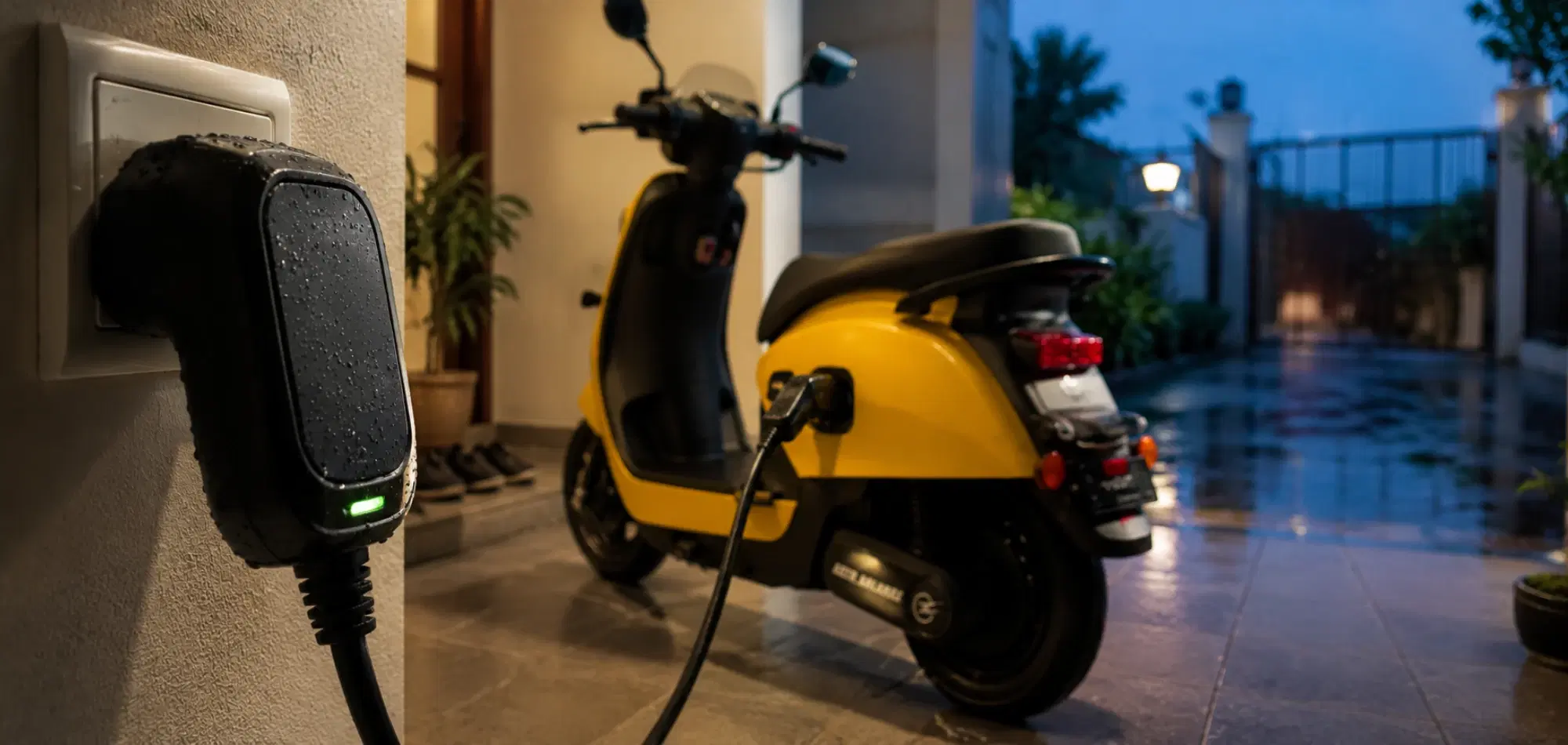
Buying the wrong electric scooter charger can damage your battery, void your warranty, or worse — create a fire hazard. With India's electric two-wheeler market booming (the global e-scooter charger market hit USD 1.21 billion in 2024 and is growing at 16.7% CAGR, according to Growth Market Reports), more Indian riders than ever need reliable, compatible chargers for their Ather, Ola, Ampere, Bajaj Chetak, or Hero Electric scooters.
This guide covers everything — electric scooter charger price in India across 48V, 60V, and 72V ratings, how to pick the right scooter battery charger, where to buy online and offline, and how to spot a fake. Whether you're searching for a scooty battery charger price near Bengaluru or comparing options on Amazon, you'll find your answer here.
What Is an Electric Scooter Charger?
An electric scooter charger is a device that converts AC mains power (230V in India) into regulated DC power to safely recharge your scooter's battery pack. It's not just a plug — it's a precision device that controls voltage, current, and cut-off to protect your battery.
Using the wrong charger — even one with the same connector — can overcharge lithium cells, reduce battery lifespan by up to 30%, or trigger thermal runaway. The global EV charging infrastructure market is projected to reach USD 52.3 billion by 2026, which tells you just how critical this component has become.
Key functions of a quality two-wheeler charger:
Converts 230V AC to the correct DC voltage (48V, 60V, or 72V)
Regulates charging current (amperage) to prevent overheating
Automatic cut-off when battery reaches full charge
LED indicators to show charging status
Built-in protection against short circuits and reverse polarity
Electric Scooter Charger Types: Voltage, Battery Chemistry & Connectors
Electric scooter chargers are classified by output voltage (48V, 60V, 72V), battery chemistry (Li-ion or Lead Acid), and connector type. Matching all three is non-negotiable for safe charging.
By Voltage Rating
48V chargers — Used in entry-level scooters like Ampere Magnus, Hero Electric Optima. Standard chargers output 54.6V (for Li-ion) or 58.4V (for LiFePO4).
60V chargers — Common in mid-range scooters. Output is typically 67.2V for Li-ion packs.
72V chargers — Found in performance scooters and cargo e-bikes. Output reaches 84V for Li-ion.
By Battery Chemistry
Lithium-ion (Li-ion) chargers — Constant current/constant voltage (CC/CV) profile. More expensive but faster and safer.
Lead Acid chargers — Three-stage charging (bulk, absorption, float). Cheaper but heavier and slower.
Pro tip: Never use a lead acid charger on a lithium battery. The charging profiles are completely different and can permanently damage lithium cells.
By Connector Type
Round 3-pin connector — Most common on budget scooters
XLR connector — Used on some Ampere and Hero models
Proprietary connectors — Ather 450X uses its own Duo Charger port; Ola S1 uses a custom connector
Anderson connector — Common on cargo and high-power scooters
Fast Charger vs Standard Charger
Feature | Standard Charger | Fast Charger |
|---|---|---|
Charging current | 3A–6A | 10A–20A |
Full charge time | 6–8 hours | 2–4 hours |
Price range | ₹800–₹3,500 | ₹4,000–₹12,000 |
Heat generated | Low | Moderate–High |
Battery wear | Minimal | Slightly higher |
The number of fast chargers globally grew 40% from 1.5 million in 2024 to 2.2 million in 2025, showing fast charging is becoming the new standard.
Electric Scooter Charger Price in India by Voltage
Electric scooter charger prices in India range from ₹600 for basic 48V lead acid chargers to ₹12,000+ for branded fast chargers. The exact price depends on voltage, amperage, battery chemistry, and brand.
Price Comparison Table: Electric Scooter Charger by Voltage & Type
Charger Type | Voltage | Amperage | Price Range (₹) | Best For |
|---|---|---|---|---|
Lead Acid Standard | 48V | 3A–5A | ₹600–₹1,500 | Budget scooters, Hero Electric |
Li-ion Standard | 48V | 5A–8A | ₹1,800–₹3,500 | Ampere Magnus, entry-level EVs |
Li-ion Standard | 60V | 6A–10A | ₹2,500–₹5,500 | Mid-range scooters, Okinawa |
Li-ion Standard | 72V | 8A–10A | ₹3,500–₹7,000 | Performance scooters, cargo EVs |
Fast Charger | 48V–72V | 10A–20A | ₹4,500–₹12,000 | Ather 450X, Ola S1, fleet use |
OEM Branded (Ather Duo) | 48V | 700W | ₹6,000–₹8,000 | Ather 450X, 450 Plus |
Third-party Compatible | 60V | 6A | ₹1,500–₹3,000 | Universal fit scooters |
Regional Pricing Examples
Bengaluru (Wilson Garden, Koramangala): Local EV spare part shops stock 60V chargers from ₹1,800–₹4,500. Ather-authorised service centres sell OEM chargers at MRP.
Mumbai & Delhi: IndiaMART and TradeIndia-listed wholesalers offer bulk pricing — 48V chargers from ₹700 per unit for dealers.
Chennai & Hyderabad: Authorised Ampere and Hero Electric dealers stock OEM chargers; third-party options available at local EV accessory shops.
Where to Buy Online
Amazon.in — Wide range of 48V, 60V, 72V chargers from ₹800 upward; check seller ratings carefully
Flipkart — Brands like Stara and Smarten available; compare scooter charger price before buying
Official brand websites — Ather Store, Ola Electric app for OEM chargers
IndiaMART / TradeIndia — Best for bulk or wholesale electric scooter charger purchases
How to Choose the Right Electric Scooter Charger
Choosing the right scooter battery charger takes four steps: match the voltage, identify the connector, verify OEM vs compatible, and check the amperage for your desired charge time.
Step 1: Check your battery voltage Look at your scooter's owner manual or the battery label. It'll say 48V, 60V, or 72V. Don't guess — using a 72V charger on a 48V battery will destroy it.
Step 2: Identify your connector type Physically inspect the charging port on your scooter. Take a photo and compare with the connector types listed above. When in doubt, ask your dealer.
Step 3: OEM vs compatible charger
OEM (Original Equipment Manufacturer) chargers are made by or for your scooter brand. They're safer and maintain warranty but cost more.
Compatible third-party chargers from brands like Smarten, Harbacore, or Glint EV can work well if they match specs exactly. Always check CE and BIS certification.
Step 4: Match the amperage Higher amperage = faster charging but more heat. For daily home charging, a 5A–8A charger is ideal. For fleet or commercial use, consider a 10A+ fast charger.
Compatibility Quick Reference
Scooter Model | Battery Voltage | Charger Type | OEM Charger Price |
|---|---|---|---|
Ather 450X | 48V Li-ion | Ather Duo (700W) | ₹6,500–₹8,000 |
Ola S1 Pro | 72V Li-ion | Ola proprietary | ₹5,000–₹7,000 |
Ampere Magnus Pro | 60V Li-ion | Round 3-pin | ₹2,500–₹4,000 |
Bajaj Chetak | 48V Li-ion | Proprietary | ₹4,500–₹6,000 |
Hero Electric Optima | 48V Lead Acid | Standard 3-pin | ₹800–₹1,500 |
Okinawa Praise Pro | 60V Li-ion | Round 3-pin | ₹2,000–₹3,500 |
How to Spot an Original Electric Scooter Charger vs a Fake
Original chargers have BIS certification markings, proper weight (quality components are heavier), consistent LED indicators, and come in branded packaging with a serial number. Fakes often lack these.
Counterfeit chargers are a real problem in India's EV market. A fake charger might work for a few weeks before failing — or worse, causing a battery fire.
Signs of a genuine charger:
BIS (Bureau of Indian Standards) certification mark on the label
CE marking for safety compliance
Correct weight — quality transformers and components add weight
Branded packaging with model number, voltage specs, and manufacturer address
Warranty card included (typically 6–12 months)
Automatic cut-off that stops charging when battery is full
Red flags for fake chargers:
Price that's 50%+ below market rate
No certification markings
Overheating within 30 minutes of use
No LED status indicator
Sold without packaging or with photocopied labels
Important: Always buy from authorised dealers, brand websites, or verified sellers on Amazon and Flipkart. Check seller ratings and return policies before purchasing.
Common Myths About Electric Scooter Chargers
Myth 1: Any charger with the same connector will work fine. False. Connector shape is just one factor. Voltage and battery chemistry must also match. A 72V charger with the same connector as your 48V scooter will permanently damage your battery pack.
Myth 2: Leaving your scooter plugged in overnight damages the battery. Not necessarily true for modern chargers. Quality chargers with automatic cut-off stop delivering current once the battery hits 100%. However, consistently charging to 100% every night does cause minor long-term degradation — most EV experts recommend charging to 80–90% for daily use.
Myth 3: Fast chargers always damage batteries. Actually, a 2025 IEA report found that fast charger adoption grew 40% globally without a corresponding spike in battery failure rates. Modern BMS (Battery Management Systems) in scooters like the Ather 450X actively manage fast charging to protect cell health. Occasional fast charging is fine; daily fast charging on older scooters without advanced BMS is not recommended.
Installation and Safety Tips for Your Electric Scooter Charger
Most electric scooter chargers are plug-and-charge devices — you don't need professional installation. Simply plug the charger into a standard 5A/15A wall socket and connect to your scooter's charging port.
DIY Charging (Standard Portable Chargers)
1. Park your scooter in a well-ventilated area 2. Connect the charger to your scooter's charging port first 3. Then plug the charger into the wall socket 4. Wait for the LED to confirm charging has started (usually red = charging, green = full) 5. Disconnect from wall first, then from scooter
When to Call a Professional
- Installing a wall-mounted fast charger (requires dedicated 15A circuit) - Hardwired charging stations for apartments or commercial spaces - Any wiring modifications to your scooter's charging port
Safety Checklist
✅ Use a surge protector or stabiliser, especially during monsoon season
✅ Never charge in direct sunlight or rain
✅ Keep the charging area dry and away from flammable materials
✅ Don't use extension cords longer than 3 metres
✅ Check charger cable for fraying or damage before each use
❌ Never leave a charging scooter completely unattended overnight if using a non-OEM charger
Frequently Asked Questions
What Is the Price of an Electric Scooter Charger in India?
Electric scooter charger prices in India range from ₹600 to ₹12,000 depending on voltage and type. Here's a quick breakdown:
48V standard charger: ₹600–₹3,500
60V standard charger: ₹2,500–₹5,500
72V standard charger: ₹3,500–₹7,000
Fast chargers (all voltages): ₹4,500–₹12,000
OEM branded chargers like the Ather Duo cost ₹6,500–₹8,000.
What Kind of Electric Scooter Charger Does Your EV Use?
Electric scooters use DC chargers that convert 230V AC mains power to the battery's required DC voltage (48V, 60V, or 72V). The charger type depends on battery chemistry — lithium-ion scooters use CC/CV chargers, while lead acid scooters use three-stage chargers. Connector types vary by brand: round 3-pin, XLR, Anderson, or proprietary connectors (Ather, Ola).
Can I Install an Electric Scooter Charger at Home?
Yes, standard portable chargers are plug-and-charge — no installation needed, just a regular 5A wall socket. However, if you want a wall-mounted fast charger, you'll need a dedicated 15A circuit installed by a licensed electrician. Most Indian apartments support standard portable charging without any modifications. Budget ₹2,000–₹5,000 for professional fast charger installation.
Are Electric Scooter Chargers Expensive in India?
No — basic electric scooter chargers in India are quite affordable, starting from ₹600 for 48V lead acid models. Mid-range lithium chargers cost ₹2,000–₹5,000. Only OEM branded or fast chargers cross ₹6,000+. The global e-scooter charger market reached USD 1.21 billion in 2024 (Growth Market Reports), driving competition that keeps Indian prices competitive.
Which Electric Scooter Charger Is Original?
The original charger is the OEM unit supplied by your scooter's manufacturer or sold through their authorised service centres. For Ather, buy from the Ather Store. For Ola, use the Ola Electric app or service centre. For Ampere, visit authorised dealers or ev2charger.in. Look for BIS certification, branded packaging, a serial number, and a warranty card to confirm authenticity.
What Is the Cost of an EV Scooter Battery in India?
EV scooter battery replacement costs in India range from ₹15,000 to ₹60,000+ depending on capacity and chemistry. A 48V lead acid pack costs ₹8,000–₹15,000. A 60V lithium-ion pack runs ₹20,000–₹35,000. Premium packs for Ather or Ola can exceed ₹50,000. This is why using the correct charger matters — a wrong charger can destroy a battery worth more than the charger itself.
How Long Does an Electric Scooter Charger Take to Fully Charge?
Most electric scooters take 4–8 hours for a full charge with a standard charger, and 2–4 hours with a fast charger. Charge time depends on battery capacity (Ah), charger amperage, and current battery level. A 60V 30Ah battery with a 6A charger takes approximately 5–6 hours. Fast chargers (10A+) cut this to 2–3 hours but cost more upfront.
Conclusion
Picking the right electric scooter charger isn't complicated once you know your battery's voltage, chemistry, and connector type. Always match voltage first — a mismatch is the single biggest cause of battery damage. Invest in a charger with BIS certification and automatic cut-off, whether you're buying a ₹1,500 third-party unit or a ₹7,000 OEM charger.
For daily home charging, a standard 5A–8A charger is perfectly adequate. If you're a heavy user or run a small fleet, a fast charger pays for itself in time saved. Buy from authorised dealers, verified Amazon or Flipkart sellers, or brand websites to avoid counterfeits. Your battery is the most expensive component on your scooter — protect it with the right charger.
Based on 1 rating

Najmus (Author)
Najmus leads content and SEO at Ecozaar, building trustworthy guides on electric two-wheelers, RTO processes, and green finance in India. With 8+ years in technical and editorial SEO, he turns complex regulations and specs into practical, citation-backed explainers. His work combines schema, CWV, and clear sourcing to help readers make confident, real-world decisions.
Read more
Related Blogs
Popular articles are selected from the same backend blog feed.

Best Bikes Under 1 Lakh in India: Price, Mileage & Low-Maintenance Commuters
Compare the best bikes under ₹1 lakh in India by price, real-world mileage, maintenance and safety — from sub-₹60k commuters to 125cc options near ₹1 lakh.
Best Bikes Under 2 Lakh in India: Streetfighters, Cruisers & All-Rounders
Compare the best bikes under ₹2 lakh in India: verified ex-showroom prices, real-world mileage, ABS and hardware, and which model fits your budget.
Best Sports Bikes Under 5 Lakh in India: Track Bikes, Supersports & Top Speed Comparison
Compare the best sports bikes under ₹5 lakh in India by 0–100 km/h, GPS top speed, track ability, electronics, mileage and ownership costs.
Best Electric Scooters Under 1 Lakh in India: Real-World Range, Subsidy & Price List
Compare the best electric scooters under ₹1 lakh by real-world range, battery size, charging, PM E-DRIVE benefits, running cost, build quality and family practi
Best Low-Cost Electric Scooters Under ₹40,000–₹50,000: Non-RTO & Budget Commuters
Compare low-cost electric scooters under ₹40,000–50,000 by price, range, battery type, charging, non-RTO rules, running cost and practical ownership risks.
Best 110cc–125cc Family Commuter Scooters in India: Mileage, Comfort & Price Comparison
Compare the best 110cc and 125cc scooters in India by price, real-world mileage, comfort, storage, braking, running cost and the value of upgrading to 125cc.
Best 150cc–160cc Bikes in India: Mileage, Price, Specs & Performance
Compare India's best 150cc–160cc bikes on mileage, price, power, braking and comfort — Pulsar N160, Apache RTR 160 4V, Xtreme 160R, FZ-S and more.
Best 200cc–250cc Performance Bikes in India: Power, Mileage & Highway Cruising
Compare India's best 200cc–250cc bikes on power-to-weight, real-world mileage, highway cruising and price, with the 200cc and 250cc classes covered together.